Social aspects
As long as the rivers run
As long as the rivers run
"In past treaties, the Aboriginal people of Canada surrendered title to their lands in return for guarantees that their traditional ways of life would be protected. Since the 1950s, governments have reneged on these commitments in order to acquire more land and water for hydroelectric development.
James B. Waldram examines this controversial topic through an analysis of the politics of hydroelectric dam construction in the Canadian Northwest, focusing on three Aboriginal communities in Manitoba and Saskatchewan. He argues that little has changed in our treatment of Aboriginal people in the past hundred years, when their resources are still appropriated by the government “for the common good.”
Using archival materials, personal interviews and largely inaccessible documents and letters, Waldram highlights the clear parallel between the treatment of Aboriginal people in the negotiations and agreements that accompany hydro development with the treaty and scrip processes of the past century." - Provided by Publisher
Trosper, Ronald L. "As Long as the Rivers Run: Hydroelectric Development and Native Communities in Western Canada." The American Indian Quarterly, vol. 16, no. 2, 1992, p. 307. http://link.galegroup.com/apps/doc/A12387436/BRIP?u=utoronto_main&sid=B….
Tanner, Adrian. "As Long as the Rivers Run: Hydroelectric Development and Native Communities in Western Canada." American Ethnologist, vol. 17, no. 2, 1990, p. 393+. http://link.galegroup.com/apps/doc/A9669983/BRIP?u=utoronto_main&sid=BR….
"As long as the rivers run: hydroelectric development and Native communities in Western Canada." Queen's Quarterly, vol. 97, no. 1, 1990, pp. 191-2. http://link.galegroup.com/apps/doc/A30102008/BRIP?u=utoronto_main&sid=B…

Optimize this page for search engines by customizing the Meta Title and Meta Description fields.
Use the Google Search Result Preview Tool to test different content ideas.
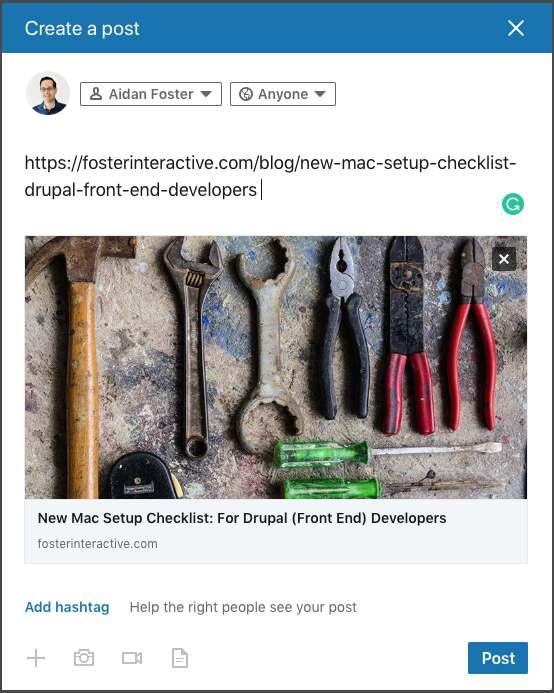
Select a Meta Image to tell a social media platform what image to use when sharing.
If blank, different social platforms like LinkedIn will randomly select an image on the page to appear on shared posts.
Posts with images generally perform better on social media so it is worth selecting an engaging image.
Indigenous peoples of the world
Indigenous peoples of the world
"In this book, author Brian Goehring introduces the Indigenous Peoples of the world, describing who they are, where they live, looking at similarities in their history and future challenges. Goehring points out how the Indigenous struggle for self-determination, a land base and an economy which allows for participation on their terms is a world wide phenomena.
Some of the interesting questions answered in this book include: How the debates in 16th century Spain between de Sepulveda and de Las Casas laid the basis for the legal concept of Aboriginal title. How many Bhil and other Indigenous Peoples will be displaced by the Narmada Dam Project? How did Pizarro subjugate the Inca Empire with less than 500 men? Where do the Penan Peoples live?" -- Provided by publisher
N/A
Optimize this page for search engines by customizing the Meta Title and Meta Description fields.
Use the Google Search Result Preview Tool to test different content ideas.
Select a Meta Image to tell a social media platform what image to use when sharing.
If blank, different social platforms like LinkedIn will randomly select an image on the page to appear on shared posts.
Posts with images generally perform better on social media so it is worth selecting an engaging image.
Indigenous cultures in an interconnected world
Indigenous cultures in an interconnected world
"Increasingly, Indigenous people are being drawn into global networks. In the long term, cultural isolation is unlikely to be a viable—even if sometimes desired—option, so how can Indigenous people protect and advance their cultural values in the face of pressure from an interconnected world?
Indigenous Cultures in an Interconnected World is a comprehensive, thought-provoking discussion of the challenges that globalization presents for Indigenous peoples everywhere. It outlines successful strategies that have been used by Indigenous peoples to promote their identities and cultural values. It looks at their role as equal and active participants and, indeed, as innovators and leaders in an interconnected world.
The chapters in this book present a global perspective on Indigenous issues. They feature a cross-disciplinary integration that takes a holistic approach—in line with that of Indigenous peoples—and include vignettes of Indigenous cultural practices." -- Provided by Publisher
Pi-Sunyer, O. "Indigenous Cultures in an Interconnected World." CHOICE: Current Reviews for Academic Libraries, July-Aug. 2001, p. 1998+. Book Review Index Plus, http://link.galegroup.com/apps/doc/A76666372/BRIP?u=utoronto_main&sid=B….
Optimize this page for search engines by customizing the Meta Title and Meta Description fields.
Use the Google Search Result Preview Tool to test different content ideas.
Select a Meta Image to tell a social media platform what image to use when sharing.
If blank, different social platforms like LinkedIn will randomly select an image on the page to appear on shared posts.
Posts with images generally perform better on social media so it is worth selecting an engaging image.
Preserving what is valued
Preserving what is valued
"Preserving What is Valued: Museums, Conservation, and First Nations by senior conservator at the Museum of Anthropology, University of British Columbia, Miriam Clavir, explores the highly charged topic of cultural property and the repatriation of cultural materials. As a museum conservator with a duty to preserve objects, the author recognizes the conflicting interests of museum preservation and First Nations efforts to preserve and access cultural heritage. She begins the discussion with the standard account of museums and their historical development of conservation practices. The major section of the book deals with First Nations perspectives about museums, conservation practices, and cultural preservation. She draws on interviews with First Nations museum professionals as well as community members who all speak to the issues of maintaining the cultural heritage and integrity of living objects that connect the past to the present and on to the future. The New Zealand experience of the Maori is provided as a comparative study with the British Columbia examples. The value of this publication rests in the extensive quotes from First Nations cultural practitioners such as Gloria Cranmer Webster, John Moses, Kim Lawson, Rita Barnes, Dora Sewid Cook, Chief Ken Harris, Alfred Scow, Debra Sparrow, and Juanita Pasco. Their voices resonate with passion and knowledge for the respectful protection, restoration and use of their cultural collections." -- Provided by publisher
McCall, Sophie. "Land, Culture, Property." Canadian Literature, no. 183, 2004, p. 134+. Book Review Index Plus, http://link.galegroup.com/apps/doc/A132835754/BRIP?u=utoronto_main&sid=….
Fairweather, Ian S. "Preserving what is valued: museums, conservation, and First Nations." Journal of the Royal Anthropological Institute, vol. 9, no. 2, 2003, p. 370+. Book Review Index Plus, http://link.galegroup.com/apps/doc/A104520034/BRIP?u=utoronto_main&sid=….
Cooper, J.L. "Preserving What Is Valued: Museums, Conservation, and First Nations." CHOICE: Current Reviews for Academic Libraries, Oct. 2002, p. 319. Book Review Index Plus, http://link.galegroup.com/apps/doc/A93309843/BRIP?u=utoronto_main&sid=B….
Optimize this page for search engines by customizing the Meta Title and Meta Description fields.
Use the Google Search Result Preview Tool to test different content ideas.
Select a Meta Image to tell a social media platform what image to use when sharing.
If blank, different social platforms like LinkedIn will randomly select an image on the page to appear on shared posts.
Posts with images generally perform better on social media so it is worth selecting an engaging image.
The truth about stories
The truth about stories
"The five radio broadcasts recorded here were recorded in November 2003 as the forty second annual series of Massey Lectures. The Lectures were arranged for broadcast by the IDEAS unit of the Canadian Broadcasting Corporation. The subjects of the five radio broadcast (and the five public lectures) recorded this year are:
Lecture 1 (Montreal) "You'll Never Believe What Happened" is Always a Great Way to Start
Lecture 2 (St. John's) You're Not the Indian I Had in Mind
Lecture 3 (Victoria) Let Me Entertain You
Lecture 4 (Calgary) A Million Porcupines Crying in the Dark
Lecture 5 (Toronto) What Is It About Us That You Don't Like" -- Provided by Canadian Broadcasting Corporation
Optimize this page for search engines by customizing the Meta Title and Meta Description fields.
Use the Google Search Result Preview Tool to test different content ideas.
Select a Meta Image to tell a social media platform what image to use when sharing.
If blank, different social platforms like LinkedIn will randomly select an image on the page to appear on shared posts.
Posts with images generally perform better on social media so it is worth selecting an engaging image.
The truth about stories
The truth about stories
"In The Truth About Stories, Native novelist and scholar Thomas King explores how stories shape who we are and how we understand and interact with other people. From creation stories to personal experiences, historical anecdotes to social injustices, racist propaganda to works of contemporary Native literature, King probes Native culture’s deep ties to storytelling.
With wry humor, King deftly weaves events from his own life as a child in California, an academic in Canada, and a Native North American with a wide-ranging discussion of stories told by and about Indians. So many stories have been told about Indians, King comments, that “there is no reason for the Indian to be real. The Indian simply has to exist in our imaginations.”
That imaginative Indian that North Americans hold dear has been challenged by Native writers—N. Scott Momaday, Leslie Marmon Silko, Louis Owens, Robert Alexie, and others—who provide alternative narratives of the Native experience that question a past, create a present, and imagine a future. King reminds the reader, Native and non-Native, that storytelling carries with it social and moral responsibilities." -- Provided by publisher
Christopher, Lindsay M. "Reviewed Work: The Truth about Stories: A Native Narrative by Thomas King." American Indian Quarterly, vol. 32, no. 2, 2008, pp. 235-237. https://www-jstor-org.myaccess.library.utoronto.ca/stable/30114272?pq-o….
Lopenzina, Drew. "King, Thomas. The truth about stories: a native narrative" The American Indian Quarterly, vol. 32, no. 3, 2008, pp. 356-359. https://muse-jhu-edu.myaccess.library.utoronto.ca/article/240973/pdf.
Teuton, Chris. "Reviewed Work: The Truth about Stories: A Native Narrative by Thomas King." World Literature Today, vol. 80, no. 6, 2006, pp. 75-76. https://www-jstor-org.myaccess.library.utoronto.ca/stable/40159273?pq-o….
Snyder, Michael. "The truth about stories: A native narrative." American Indian Culture and Research Journal, vol. 29, no. 4, 2005, pp. 170-172. https://uclajournals-org.myaccess.library.utoronto.ca/doi/pdf/10.17953/….
Optimize this page for search engines by customizing the Meta Title and Meta Description fields.
Use the Google Search Result Preview Tool to test different content ideas.
Select a Meta Image to tell a social media platform what image to use when sharing.
If blank, different social platforms like LinkedIn will randomly select an image on the page to appear on shared posts.
Posts with images generally perform better on social media so it is worth selecting an engaging image.
Indigenous peoples, the environment and law
Indigenous peoples, the environment and law
"Deals with the "intersection of indigenous peoples and the law, particularly within environmental law and international environmental law, emphasizing themes that are increasingly prominent on the agenda of the international community. In the anthology, twenty-three articles are collected that address significant conflicts with an interdisciplinary vantage point, where the interests of indigenous peoples and environmental law are closely intertwined. It analyses biodiversity, traditional knowledge, the responsibility of multinational corporations, and restitution.
Sixteen of the selections provide a comparative perspective on the conflicts and issues involving indigenous peoples arising in specific countries. From the fragile environment of the Arctic, to sacred sites and water in the United States, the diversity of indigenous peoples is explored within the context of governance, natural resources and conflict resolution. From native Hawaiians to the Sami of Scandinavia, selected themes parallel and contrast with one another in concert with the quest for survival in Bolivia, Guatemala, the Philippines and Russia. At the same time, the relationship of indigenous peoples to nature and the struggle for identity are common themes in virtually all of the selections. Case studies, drawing on anthropology and history, in addition to law, combined with several more conceptual contributions, provide a mosaic that places indigenous peoples in both a comparative and international context. In addition, Watters includes several articles that explore trends in convergence and globalization, which have especially important ramifications for indigenous peoples."-- Provided by publisher
McAllister, Sean T. "Indigenous Peoples, the Environment, and Law: An Anthology." UCLA Journal of Environmental Law & Policy, Summer 2005, p. 27+. Gale Literature: Book Review Index, https://link-gale-com.myaccess.library.utoronto.ca/apps/doc/A143580596/….
Optimize this page for search engines by customizing the Meta Title and Meta Description fields.
Use the Google Search Result Preview Tool to test different content ideas.
Select a Meta Image to tell a social media platform what image to use when sharing.
If blank, different social platforms like LinkedIn will randomly select an image on the page to appear on shared posts.
Posts with images generally perform better on social media so it is worth selecting an engaging image.
Do glaciers listen?
Do glaciers listen?
"Do Glaciers Listen? explores the conflicting depictions of glaciers to show how natural and cultural histories are objectively entangled in the Mount Saint Elias ranges. This rugged area, where Alaska, British Columbia, and the Yukon Territory now meet, underwent significant geophysical change in the late eighteenth and nineteenth centuries, which coincided with dramatic social upheaval resulting from European exploration and increased travel and trade among Aboriginal peoples.
European visitors brought with them varying conceptions of nature as sublime, as spiritual, or as a resource for human progress. They saw glaciers as inanimate, subject to empirical investigation and measurement. Aboriginal oral histories, conversely, described glaciers as sentient, animate, and quick to respond to human behaviour. In each case, however, the experiences and ideas surrounding glaciers were incorporated into interpretations of social relations.
Focusing on these contrasting views during the late stages of the Little Ice Age (1550-1900), Cruikshank demonstrates how local knowledge is produced, rather than discovered, through colonial encounters, and how it often conjoins social and biophysical processes. She then traces how the divergent views weave through contemporary debates about cultural meanings as well as current discussions about protected areas, parks, and the new World Heritage site. Readers interested in anthropology and Native and northern studies will find this a fascinating read and a rich addition to circumpolar literature." - Provided by publisher
Wenzel, George W. "Do Glaciers Listen? Local Knowledge, Colonial Encounters, and Social Imagination." Arctic, vol. 60, no. 2, 2007, p. 209+. https://link-gale-com.myaccess.library.utoronto.ca/apps/doc/A166433638/….
Baldwin, Andrew. "Do Glaciers Listen? Local Knowledge, Colonial Encounters, and Social Imagination. by Julie Cruikshank. Vancouver and Toronto: UBC Press, 2005. Xii + 312 Pp. Illustrations, Maps, Notes, Bibliography, and Index. Cloth $85.00, Paper $29.95." Environmental History 12, no. 4 (2007, 2007): 1005-6, http://resolver.scholarsportal.info/resolve/10845453/v12i0004/1005_dgll….
Wallis, Robert J. "Do Glaciers Listen?: Local Knowledge, Colonial Encounters and Social Imagination." Time and Mind 2, no. 1 (2009, 2009): 93-7, http://resolver.scholarsportal.info/resolve/1751696x/v02i0001/93_dgllkc….
Mason, Rachel. American Anthropologist, vol. 109, no. 3, 2007, pp. 554–555. JSTOR, www.jstor.org/stable/4496740.
Gellert, Paul K. Contemporary Sociology, vol. 36, no. 3, 2007, pp. 260–262. JSTOR, www.jstor.org/stable/20443796.
Norden, Christopher. "Do Glaciers Listen?: Local Knowledge, Colonial Encounters, and Social Imagination." Interdisciplinary Studies in Literature and Environment 15, no. 1 (2008, 2008): 265-6, http://resolver.scholarsportal.info/resolve/10760962/v15i0001/265_dgllk….
Zarger, R. K. (2007). Do glaciers listen? local knowledge, colonial encounters, and social imagination. Journal of Ecological Anthropology, 11(1), 80-81. Retrieved from http://myaccess.library.utoronto.ca/login?url=https://search-proquest-c…
Wilson, Eric G. "Julie Cruikshank. do Glaciers Listen? Local Knowledge, Colonial Encounters, and Social Imagination. Vancouver: University of British Columbia Press. 2005. Pp. Xii, 312. $85.00." The American Historical Review 111, no. 3 (2006, 2006): 799-800, http://resolver.scholarsportal.info/resolve/00028762/v111i0003/799_jcdg….
Henshaw, A. (2007), Do glaciers listen? Local knowledge, colonial encounters, and social imagination – By Julie Cruikshank. Journal of the Royal Anthropological Institute, 13: 230-231. https://rai-onlinelibrary-wiley-com.myaccess.library.utoronto.ca/doi/fu…
Optimize this page for search engines by customizing the Meta Title and Meta Description fields.
Use the Google Search Result Preview Tool to test different content ideas.
Select a Meta Image to tell a social media platform what image to use when sharing.
If blank, different social platforms like LinkedIn will randomly select an image on the page to appear on shared posts.
Posts with images generally perform better on social media so it is worth selecting an engaging image.
Cree hunters of Mistassini
"During the winter since times predating agriculture, the Cree of Mistassini have gone to the bush of the James and Ungava Bay area to hunt. Three hunting families agreed to meet an NFB crew, who filmed the building of the winter camp, the hunting, the relationship to the land, and the rhythms of Cree family life. This sensitive film expresses Cree beliefs and the ecological principles that are the foundation of their lives." -- Back cover
Optimize this page for search engines by customizing the Meta Title and Meta Description fields.
Use the Google Search Result Preview Tool to test different content ideas.
Select a Meta Image to tell a social media platform what image to use when sharing.
If blank, different social platforms like LinkedIn will randomly select an image on the page to appear on shared posts.
Posts with images generally perform better on social media so it is worth selecting an engaging image.
Where the pavement ends
Where the pavement ends
"Over the past fifteen years, Canada’s Aboriginal healing community has emerged as a vital and visible force. Creative recovery programs have been established across the country, and international initiatives such as the “Healing Our Spirit Worldwide” gatherings have originated here. The Canadian government has thrown millions of dollars at the issue of addictions, yet alcoholism, fetal alcohol spectrum disorder, drug abuse and gambling are epidemic today in the lives of Aboriginal people. Where the Pavement Ends is filled with inspiring stories gathered from journalist Marie Wadden’s discussions with activists across Canada who are involved in the Aboriginal healing movement. But the book is also a passionate wake-up call aimed at all Canadians.
Existing government policies, Wadden argues, perpetuate the problems that are tearing Aboriginal families and communities apart. We must make social healing in Aboriginal communities an immediate national priority. We must also demand public policy that guarantees First Nations, Inuit and Métis people the right to live as full and equal citizens. In these ways, we can offer true support to these marginalized communities." -- Provided by publisher
Martin, Keavy. "Charting indigenous pasts and futures." Canadian Literature, no. 203, 2009, p. 155. Book Review Index Plus, http://link.galegroup.com/apps/doc/A234570602/BRIP?u=utoronto_main&sid=….
LeBlanc, Denis. “Dancing with Dependencies Where the Pavement Ends: A Comparative Review on Aboriginal Healing and Development.” Acadiensis, vol. 38, no. 1, 2009, pp. 156–162. JSTOR, www.jstor.org/stable/41501731.
Optimize this page for search engines by customizing the Meta Title and Meta Description fields.
Use the Google Search Result Preview Tool to test different content ideas.
Select a Meta Image to tell a social media platform what image to use when sharing.
If blank, different social platforms like LinkedIn will randomly select an image on the page to appear on shared posts.
Posts with images generally perform better on social media so it is worth selecting an engaging image.