Aboriginal Law
Key developments in Aboriginal law
"This is the inaugural edition of Key Developments in Aboriginal Law - 2019. The objective of this book is to provide commentary from leading practitioners and thought-leaders on timely and important issues in the area of Aboriginal law in Canada. Aboriginal law is a rapidly developing area of Canadian law affecting all parts of Canada and all businesses, governments, and Aboriginal peoples." -- Provided by publisher

Optimize this page for search engines by customizing the Meta Title and Meta Description fields.
Use the Google Search Result Preview Tool to test different content ideas.
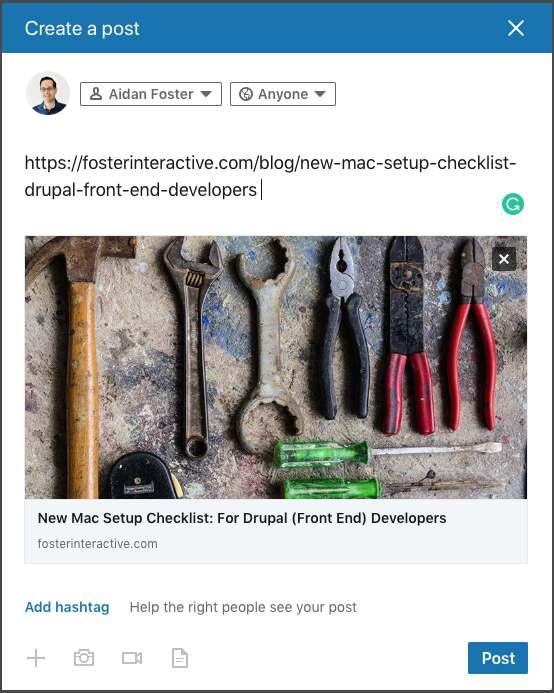
Select a Meta Image to tell a social media platform what image to use when sharing.
If blank, different social platforms like LinkedIn will randomly select an image on the page to appear on shared posts.
Posts with images generally perform better on social media so it is worth selecting an engaging image.
Business implications of Aboriginal law
"This is a collection of 12 papers examining how recent aboriginal law developments create opportunities and challenges for economic developments in both Indigenous communities and the Canadian economy. It offers a unique discussion of how aboriginal public law connects to private law and serves to present practical advice to those who are involved in business with Indigenous communities.
Features
-- Unique subject matter - badly needed resource for those involved in aboriginal businesses
-- Expert Insights from leading aboriginal law practitioners and advisers, including former Supreme Court judge The Hon. Ian Binnie - keep abreast of recent developments in the field and their implications for current operations of businesses involving aboriginal communities
-- Practical advice - help make sound business decisions and formulate strategies to advance potential economic opportunities involving aboriginal communities" -- Provided by publisher
Optimize this page for search engines by customizing the Meta Title and Meta Description fields.
Use the Google Search Result Preview Tool to test different content ideas.
Select a Meta Image to tell a social media platform what image to use when sharing.
If blank, different social platforms like LinkedIn will randomly select an image on the page to appear on shared posts.
Posts with images generally perform better on social media so it is worth selecting an engaging image.
Native rights and the boundaries of Rupert's Land and the North-Western Territory
Native rights and the boundaries of Rupert's Land and the North-Western Territory
51 pages, plus Appendices. Originated out of an analysis of the terms under which Rupert's Land and the North-Western Territory were admitted into Canada in 1870 and the relevance of those terms to native rights.
Optimize this page for search engines by customizing the Meta Title and Meta Description fields.
Use the Google Search Result Preview Tool to test different content ideas.
Select a Meta Image to tell a social media platform what image to use when sharing.
If blank, different social platforms like LinkedIn will randomly select an image on the page to appear on shared posts.
Posts with images generally perform better on social media so it is worth selecting an engaging image.
Native law
Native law
"Native Law is the leading Canadian publication on Aboriginal law. It offers a comprehensive breadth of coverage across every subject area relevant to the First Nations, Métis and Inuit peoples of Canada, including Aboriginal title and rights, treaty rights, First Nations governance and land management, criminal and family law matters, and the Indian Act. Jack Woodward, Q.C., an active practitioner and former law professor, adds authoritative commentary which is frequently relied upon by Canadian courts, including the Supreme Court of Canada. Native Law is updated six times per year, and is a trusted, key resource for every law library or law office dealing with issues of Aboriginal law." -- Provided by publisher
Carter, Roger. "Native Law." Ottawa Law Review, Winter 1991, pp. 269-272. Book Review Index Plus, https://heinonline-org.myaccess.library.utoronto.ca/HOL/Page?lname=&han….
Foster, Hamar. "Native Law." Canadian Bar Review, Mar. 1991, pp. 198-200. Book Review Index Plus, https://heinonline-org.myaccess.library.utoronto.ca/HOL/Page?lname=&han….
Mandamin, Leonard. "Native Law." Alberta Law Review, Spring 1991, pp. 755-759. Book Review Index Plus, https://heinonline-org.myaccess.library.utoronto.ca/HOL/Page?lname=&han….
Aldridge, Jim. "Native Law." The Advocate, July 1990, pp. 595-596. Book Review Index Plus, https://heinonline-org.myaccess.library.utoronto.ca/HOL/Page?lname=&han….
Optimize this page for search engines by customizing the Meta Title and Meta Description fields.
Use the Google Search Result Preview Tool to test different content ideas.
Select a Meta Image to tell a social media platform what image to use when sharing.
If blank, different social platforms like LinkedIn will randomly select an image on the page to appear on shared posts.
Posts with images generally perform better on social media so it is worth selecting an engaging image.
Consolidated native law statutes, regulations, and treaties
Consolidated native law statutes, regulations, and treaties
"Under the editorial direction of Jack Woodward, this work continues to bring together a timely consolidation of the significant statutes, regulations and treaties that have an impact on the area of native law. Additionally, this text contains helpful finding tools, including a detailed master table of contents, a table of contents for each statute and a comprehensive key word index, which simplify research." - Provided by publisher
Optimize this page for search engines by customizing the Meta Title and Meta Description fields.
Use the Google Search Result Preview Tool to test different content ideas.
Select a Meta Image to tell a social media platform what image to use when sharing.
If blank, different social platforms like LinkedIn will randomly select an image on the page to appear on shared posts.
Posts with images generally perform better on social media so it is worth selecting an engaging image.
Commercial implications of native title
Commercial implications of native title
"This book focuses on the extensive commercial implications of Mabo, Wik and the 1997 native title legislation. It covers Australian native title legislation and cases; the Wik decision and post-Wik legislative options; the government's proposed changes to the Native Title Act; Cape York and Crescent Head Agreements; the Century Zinc negotiations; accounting and auditing implications; implications for mining and pastoral companies; freshwater resources and native title; leases and native title; native title negotiations and mediations; native title policy issues for governments; practical steps for professional advisers; and evidence and proof of native title" - Provided by publisher
Parker, D. (1997). Commercial implications of native title. Australian Accountant, 67(6), 60. http://myaccess.library.utoronto.ca/login?url=https://search-proquest-c…
Clarke, J. (1997). Commercial implications of native title. Federal Law Review, 25(2), 385-390. https://heinonline-org.myaccess.library.utoronto.ca/HOL/Page?handle=hei…
Optimize this page for search engines by customizing the Meta Title and Meta Description fields.
Use the Google Search Result Preview Tool to test different content ideas.
Select a Meta Image to tell a social media platform what image to use when sharing.
If blank, different social platforms like LinkedIn will randomly select an image on the page to appear on shared posts.
Posts with images generally perform better on social media so it is worth selecting an engaging image.
Annotated Indian Act and aboriginal constitutional provisions
"Written by Shin Imai, an experienced Aboriginal law practitioner and teacher, this book features the full text of the Indian Act and regulations, accompanied by hundreds of annotations and section-by-section summaries of all significant court decisions interpreting or applying the legislation. As well, this work includes the consolidation of the Indian Act and regulations and hundreds of annotations, the full texts of legislation and regulations including the Indian Oil and Gas Act and the First Nations Land Management Act; a review of the case law under s. 91(24) of the Constitution Act, 1867 [s. 91(24) (division of powers)] and the Canadian Charter of Rights and Freedoms [s. 15 (equality rights), s. 25 (Aboriginal Rights and Freedoms not affected by the Charter) and s. 35(1) (Aboriginal and Treaty rights)]; and a brief annual review of the law, highlights of other legislation related to Aboriginal peoples, important cases, and a summary of the most important Supreme Court of Canada cases on Aboriginal law issues." -- Provided by publisher
Optimize this page for search engines by customizing the Meta Title and Meta Description fields.
Use the Google Search Result Preview Tool to test different content ideas.
Select a Meta Image to tell a social media platform what image to use when sharing.
If blank, different social platforms like LinkedIn will randomly select an image on the page to appear on shared posts.
Posts with images generally perform better on social media so it is worth selecting an engaging image.
Aboriginal law
Aboriginal law
"The third edition of Aboriginal Law: Commentary, Cases and Materials contains more extensive and detailed commentary than earlier editions, and highlights the most important aspects of Canadian law affecting Aboriginal peoples. The author provides detailed information on and analysis of current law, referring to relevant court decisions, statutes, and land claims agreements. Key excerpts from major cases and materials are included. All major Supreme Court of Canada decisions on Aboriginal rights in the last four decades are referred to and most are excerpted. The addition of a detailed index makes this book easy to use, and the selected bibliography after each chapter assists readers with more in-depth research. The Table of Cases contains page numbers indicating where cases are referenced and/or excerpted which will be of particular value to the legal practitioner. This book is national in scope, but it also canvasses the many regional situations that exist in Canada. The claims of First Nations peoples in BC, the unique situation of Maritime First Nations, land claim agreements in northern Canada, and the special place of the numbered treaties covering the Prairie provinces are considered and reviewed." - Provided by publisher
Optimize this page for search engines by customizing the Meta Title and Meta Description fields.
Use the Google Search Result Preview Tool to test different content ideas.
Select a Meta Image to tell a social media platform what image to use when sharing.
If blank, different social platforms like LinkedIn will randomly select an image on the page to appear on shared posts.
Posts with images generally perform better on social media so it is worth selecting an engaging image.
Permission to develop
Permission to develop
"Permission to Develop is a unique, Canadian resource that legal practitioners, researchers, and policy-makers will find valuable in their work. It provides a framework for understanding the complex web of agreements, legislation, case-law, and regulations pertaining to Aboriginal rights and claims at both the federal and provincial/territorial levels. It also provides insight into the legal constraints that structure the economic development of First Nations in Canada.
Section I examines the principles underlying Aboriginal rights and the history of Aboriginal claims to land and resources. The notion of the treaty as a sacred exchange between the Crown and Aboriginal societies is explored, as is the fiduciary relationship created between the Crown and Aboriginal peoples. Special attention is given to the Constitution Act of 1982 which, for the first time, affirmed Aboriginal treaty rights. The division of powers between the federal and provincial/territorial levels of government is also examined, and there is an in-depth look at the Indian Act, Indian Oil and Gas Act, the Federal-Provincial Resource Agreements on Reserve Lands, the Fisheries Act, the Migratory Birds Convention Act, and the First National Land Management Act.
Section II provides a province-by-province breakdown of major legislation, regulations, and treaties with special attention to Aboriginal rights to land and resources. Complex issues that are unique to particular regions and provinces are also examined in this section, including modern agreements and treaties (such as the Nisga’a of British Columbia) and currently unresolved land claims (such as the Atikamekw and Montagnais claims).
Permission to Develop is more than a reference book. It is the first comprehensive and integrated attempt to assess Aboriginal treaties, laws, and regulations at all levels of government. It is essential reading for those interested in the legal issues pertaining to Aboriginal communities, Aboriginal economic development, and the politics and the sociology of First Nations." -- Provided by publisher
Optimize this page for search engines by customizing the Meta Title and Meta Description fields.
Use the Google Search Result Preview Tool to test different content ideas.
Select a Meta Image to tell a social media platform what image to use when sharing.
If blank, different social platforms like LinkedIn will randomly select an image on the page to appear on shared posts.
Posts with images generally perform better on social media so it is worth selecting an engaging image.
Aboriginal legal issues
Aboriginal legal issues
"This comprehensive casebook surveys the most important issues in Canadian law concerning Aboriginal peoples, contextualising them within their larger cultural, political and sociological framework. Also intended to be a general reference work for lawyers, judges, Indian chiefs and council members, Métis and Inuit leaders, and policy makers for governments and businesses who work with Aboriginal people, it surveys the most important issues in Canadian law concerning Aboriginal people. The materials also contain insights into questions courts have left unanswered, providing readers with ideas about how the law will develop in the future. " - Provided by publisher
Optimize this page for search engines by customizing the Meta Title and Meta Description fields.
Use the Google Search Result Preview Tool to test different content ideas.
Select a Meta Image to tell a social media platform what image to use when sharing.
If blank, different social platforms like LinkedIn will randomly select an image on the page to appear on shared posts.
Posts with images generally perform better on social media so it is worth selecting an engaging image.