Environmental Law
Struggle for the land
Struggle for the land
"From the Sonora to the Arctic, North America's indigenous peoples have been dispossessed of nearly all their original territory, with the residue held undera a colonial "trust" authority by the U.S. and Canada. Ironically, the presumably useless fragments of geography set aside to keep Native Americans out of sight and mind have turned out to be some of the most resource-rich on the planet. Native Americans should thus be among the most affluent sectors of the population, but instead, they are the absolute poorest. The reason for this paradox is clear: the riches of North America's indigenous nations continue to be channeled into the settler's economy.
By focusing upon certain modes of resource exploitation, Churchill demonstrates clearly that the effects of state/corporate business in the native-populated hinterlands of the continent are as ecocidal as they are genocidal. The ecological havoc being wreaked cannot be contained within reservation areas, and therefore poses a threat to all North Americans, presenting a common ground upon which Indians and non-Indians alike can and must struggle to repeal the status quo.
This seminal book established Churchill as an intellectual force to be reckoned with in indigenous land rights debates. Required reading for anyone interested in Native North America and ecological justice." -- Provided by publisher
"Struggle for the Land: Indigenous Resistance to Genocide, Ecocide and Expropriation in Contemporary North America." Publishers Weekly, 7 Dec. 1992, p. 59. Book Review Index Plus, http://link.galegroup.com/apps/doc/A13263260/BRIP?u=utoronto_main&sid=B….

Optimize this page for search engines by customizing the Meta Title and Meta Description fields.
Use the Google Search Result Preview Tool to test different content ideas.
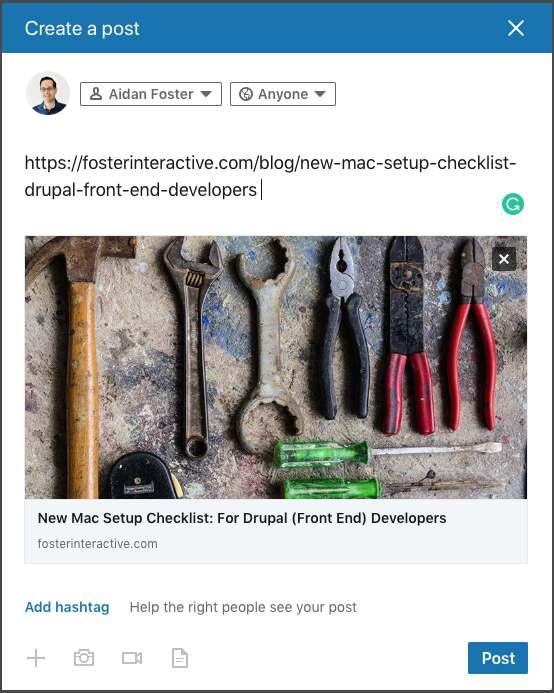
Select a Meta Image to tell a social media platform what image to use when sharing.
If blank, different social platforms like LinkedIn will randomly select an image on the page to appear on shared posts.
Posts with images generally perform better on social media so it is worth selecting an engaging image.
Do glaciers listen?
Do glaciers listen?
"Do Glaciers Listen? explores the conflicting depictions of glaciers to show how natural and cultural histories are objectively entangled in the Mount Saint Elias ranges. This rugged area, where Alaska, British Columbia, and the Yukon Territory now meet, underwent significant geophysical change in the late eighteenth and nineteenth centuries, which coincided with dramatic social upheaval resulting from European exploration and increased travel and trade among Aboriginal peoples.
European visitors brought with them varying conceptions of nature as sublime, as spiritual, or as a resource for human progress. They saw glaciers as inanimate, subject to empirical investigation and measurement. Aboriginal oral histories, conversely, described glaciers as sentient, animate, and quick to respond to human behaviour. In each case, however, the experiences and ideas surrounding glaciers were incorporated into interpretations of social relations.
Focusing on these contrasting views during the late stages of the Little Ice Age (1550-1900), Cruikshank demonstrates how local knowledge is produced, rather than discovered, through colonial encounters, and how it often conjoins social and biophysical processes. She then traces how the divergent views weave through contemporary debates about cultural meanings as well as current discussions about protected areas, parks, and the new World Heritage site. Readers interested in anthropology and Native and northern studies will find this a fascinating read and a rich addition to circumpolar literature." - Provided by publisher
Wenzel, George W. "Do Glaciers Listen? Local Knowledge, Colonial Encounters, and Social Imagination." Arctic, vol. 60, no. 2, 2007, p. 209+. https://link-gale-com.myaccess.library.utoronto.ca/apps/doc/A166433638/….
Baldwin, Andrew. "Do Glaciers Listen? Local Knowledge, Colonial Encounters, and Social Imagination. by Julie Cruikshank. Vancouver and Toronto: UBC Press, 2005. Xii + 312 Pp. Illustrations, Maps, Notes, Bibliography, and Index. Cloth $85.00, Paper $29.95." Environmental History 12, no. 4 (2007, 2007): 1005-6, http://resolver.scholarsportal.info/resolve/10845453/v12i0004/1005_dgll….
Wallis, Robert J. "Do Glaciers Listen?: Local Knowledge, Colonial Encounters and Social Imagination." Time and Mind 2, no. 1 (2009, 2009): 93-7, http://resolver.scholarsportal.info/resolve/1751696x/v02i0001/93_dgllkc….
Mason, Rachel. American Anthropologist, vol. 109, no. 3, 2007, pp. 554–555. JSTOR, www.jstor.org/stable/4496740.
Gellert, Paul K. Contemporary Sociology, vol. 36, no. 3, 2007, pp. 260–262. JSTOR, www.jstor.org/stable/20443796.
Norden, Christopher. "Do Glaciers Listen?: Local Knowledge, Colonial Encounters, and Social Imagination." Interdisciplinary Studies in Literature and Environment 15, no. 1 (2008, 2008): 265-6, http://resolver.scholarsportal.info/resolve/10760962/v15i0001/265_dgllk….
Zarger, R. K. (2007). Do glaciers listen? local knowledge, colonial encounters, and social imagination. Journal of Ecological Anthropology, 11(1), 80-81. Retrieved from http://myaccess.library.utoronto.ca/login?url=https://search-proquest-c…
Wilson, Eric G. "Julie Cruikshank. do Glaciers Listen? Local Knowledge, Colonial Encounters, and Social Imagination. Vancouver: University of British Columbia Press. 2005. Pp. Xii, 312. $85.00." The American Historical Review 111, no. 3 (2006, 2006): 799-800, http://resolver.scholarsportal.info/resolve/00028762/v111i0003/799_jcdg….
Henshaw, A. (2007), Do glaciers listen? Local knowledge, colonial encounters, and social imagination – By Julie Cruikshank. Journal of the Royal Anthropological Institute, 13: 230-231. https://rai-onlinelibrary-wiley-com.myaccess.library.utoronto.ca/doi/fu…
Optimize this page for search engines by customizing the Meta Title and Meta Description fields.
Use the Google Search Result Preview Tool to test different content ideas.
Select a Meta Image to tell a social media platform what image to use when sharing.
If blank, different social platforms like LinkedIn will randomly select an image on the page to appear on shared posts.
Posts with images generally perform better on social media so it is worth selecting an engaging image.
Hunters at the margin
Hunters at the margin
"In the late nineteenth century, to the alarm of government conservationists, the North American plains bison population collapsed. Yet large herds of other big game animals still roamed the Northwest Territories, and Aboriginal people depended on them for food and clothing.
Hunters at the Margin examines the conflict in the Northwest Territories between Native hunters and conservationists over three big game species: the wood bison, the muskox, and the caribou. John Sandlos argues that the introduction of game regulations, national parks, and game sanctuaries was central to the assertion of state authority over the traditional hunting cultures of the Dene and Inuit. His archival research undermines the assumption that conservationists were motivated solely by enlightened preservationism, revealing instead that commercial interests were integral to wildlife management in Canada." -- Provided by Publisher
Gulig, Anthony. "Hunters at the Margin: Native People and Wildlife Conservation in the Northwest Territories." The Western Historical Quarterly, vol. 40, no. 3, 2009, p. 369. Book Review Index Plus, Retrieved from http://link.galegroup.com/apps/doc/A207856400/BRIP?u=utoronto_main&sid=….
Huntington, Henry P. "Hunters at the Margin: Native People and Wildlife Conservation in the Northwest Territories." Arctic, vol. 61, no. 3, 2008, p. 334+. Book Review Index Plus, Retrieved from http://link.galegroup.com/apps/doc/A186582326/BRIP?u=utoronto_main&sid=….
Sawchuk, Christina. "Hunters at the Margin: Native People and Wildlife Conservation in the Northwest Territories." Canadian Historical Review, vol. 90, no. 1, 2009, p. 182+. Book Review Index Plus, Retrieved from http://link.galegroup.com/apps/doc/A198169397/BRIP?u=utoronto_main&sid=….
Schreiber, Dorothee. "John Sandlos. Hunters at the Margin: Native People and Wildlife Conservation in the Northwest Territories." The American Indian Quarterly, vol. 34, no. 3, 2010, p. 402+. Book Review Index Plus, Retrieved from http://link.galegroup.com/apps/doc/A233049943/BRIP?u=utoronto_main&sid=….
Thiel, Cecelia. "Hunters at the Margin: Native People and Wildlife Conservation in the Northwest Territories." Pacific Northwest Quarterly, vol. 99, no. 4, 2008, p. 198+. Book Review Index Plus, Retrieved from http://link.galegroup.com/apps/doc/A199150751/BRIP?u=utoronto_main&sid=….
Optimize this page for search engines by customizing the Meta Title and Meta Description fields.
Use the Google Search Result Preview Tool to test different content ideas.
Select a Meta Image to tell a social media platform what image to use when sharing.
If blank, different social platforms like LinkedIn will randomly select an image on the page to appear on shared posts.
Posts with images generally perform better on social media so it is worth selecting an engaging image.
Environmental justice and the rights of indigenous peoples
Environmental justice and the rights of indigenous peoples
"More than 300 million people in over 70 countries make up the world's indigenous populations. Yet despite ever-growing pressures on their lands, environment and way of life through outside factors such as climate change and globalization, their rights in these and other respects are still not fully recognized in international law.
In this incisive book, Laura Westra deftly reveals the lethal effects that damage to ecological integrity can have on communities. Using examples in national and international case law, she demonstrates how their lack of sufficient legal rights leaves indigenous peoples defenceless, time and again, in the face of governments and businesses who have little effective incentive to consult with them (let alone gain their consent) in going ahead with relocations, mining plans and more. The historical background and current legal instruments are discussed and, through examples from the Americas, Africa, Oceania and the special case of the Arctic, a picture emerges of how things must change if indigenous communities are to survive. It is a warning to us all from the example of those who live most closely in tune with nature and are the first to feel the impact when environmental damage goes unchecked." - Provided by publisher
Ruru, J. (2009). Environmental justice & the rights of indigenous peoples. international & domestic legal perspectives. edited by Laura Westra. Journal of Environmental Law, 21(2), 385-387. http://resolver.scholarsportal.info/resolve/09528873/v21i0002/385_ejtro….
Optimize this page for search engines by customizing the Meta Title and Meta Description fields.
Use the Google Search Result Preview Tool to test different content ideas.
Select a Meta Image to tell a social media platform what image to use when sharing.
If blank, different social platforms like LinkedIn will randomly select an image on the page to appear on shared posts.
Posts with images generally perform better on social media so it is worth selecting an engaging image.
Home is the hunter
Home is the hunter
"The James Bay Cree lived in relative isolation until 1970, when Northern Quebec was swept up in the political and cultural changes of the Quiet Revolution. The ensuing years have brought immense change for the Cree, who now live with the consequences of Quebec’s massive development of hydroelectricity, timber, and mineral resources in the North.
Home Is the Hunter presents the historical, environmental, and cultural context from which this recent story grows. Hans Carlson shows how the Cree view their lands as their home, their garden, and their memory of themselves as a people. By investigating the Cree’s relationship with the land and their three hundred years of contact with outsiders, the author illuminates the process of cultural negotiation at the foundation of ongoing political and environmental debates.
This book is more than a story of dam building and industrial logging in northern Quebec. It offers a way of thinking about indigenous peoples’ struggles for rights and environmental justice in Canada and elsewhere." -- Provided by Publisher
Brown, Jennifer. "Home Is the Hunter: The James Bay Cree and their Land." Canadian Historical Review, vol. 90, no. 4, 2009, p. 807+. Book Review Index Plus, http://link.galegroup.com/apps/doc/A216270395/BRIP?u=utoronto_main&sid=….
57.
Clapperton, Jonathan. "Home Is the Hunter: The James Bay Cree and Their Land." H-Net: Humanities and Social Sciences Online, 2009. Book Review Index Plus, http://link.galegroup.com/apps/doc/A203110804/BRIP?u=utoronto_main&sid=….
Morantz, Toby. "Home is the Hunter: The James Bay Cree and Their Land." University of Toronto Quarterly, vol. 79, no. 1, 2010, pp. 554-556. Book Review Index Plus, http://link.galegroup.com/apps/doc/A340737732/BRIP?u=utoronto_main&sid=….
Morrison, W.R. "Carlson, Hans M.: Home is the hunter: the James Bay Cree and their land." CHOICE: Current Reviews for Academic Libraries, Aug. 2009, p. 2392. Book Review Index Plus, http://link.galegroup.com/apps/doc/A266634284/BRIP?u=utoronto_main&sid=….
Sandlos, John. "Home is the Hunter: The James Bay Cree and Their Land." Northern Review, Spring 2010, p. 201+. Book Review Index Plus, http://link.galegroup.com/apps/doc/A228715202/BRIP?u=utoronto_main&sid=….
Optimize this page for search engines by customizing the Meta Title and Meta Description fields.
Use the Google Search Result Preview Tool to test different content ideas.
Select a Meta Image to tell a social media platform what image to use when sharing.
If blank, different social platforms like LinkedIn will randomly select an image on the page to appear on shared posts.
Posts with images generally perform better on social media so it is worth selecting an engaging image.
American Indian law deskbook
American Indian law deskbook
"A collaborative effort from attorney general offices faced daily with legal questions involving state and tribal relations, the American Indian Law Deskbook, Fourth Edition is an up-to-date, comprehensive treatise on Indian law. The Deskbook provides readers with the necessary historical and legal framework to understand the complexities faced by states, Indian tribes, and the federal government in Indian country.Included are:
- The evolution of federal statutory Indian law and the judicial foundations of federal Indian policy.
- An extensive compilation and analysis of federal and state court decisions.
- Reservation and Indian lands ownership and property interests.
- The parameters of criminal jurisdiction in Indian country.
- Concepts of tribal sovereignty and jurisdiction relating to a number of specific areas, including tribal courts, hunting and fishing, environmental regulation, water rights, gaming, and child welfare.
Cooperative approaches used by the states and tribes for resolving jurisdictional disputes and promoting better relations." - Provided by Publisher
Optimize this page for search engines by customizing the Meta Title and Meta Description fields.
Use the Google Search Result Preview Tool to test different content ideas.
Select a Meta Image to tell a social media platform what image to use when sharing.
If blank, different social platforms like LinkedIn will randomly select an image on the page to appear on shared posts.
Posts with images generally perform better on social media so it is worth selecting an engaging image.
Biocultural diversity and indigenous ways of knowing
Biocultural diversity and indigenous ways of knowing
"At the dawn of the third millennium, dramatic challenges face human civilization everywhere. Relations between human beings and their environment are in peril, with mounting threats to both biological diversity of life on earth and cultural diversity of human communities. The peoples of the Circumpolar Arctic are at the forefront of these challenges and lead the way in seeking meaningful responses. In Biocultural Diversity and Indigenous Ways of Knowing, author Karim-Aly Kassam positions the Arctic and sub-Arctic as a homeland rather than simply a frontier for resource exploitation. Kassam aims to empirically and theoretically illustrate that subsistence hunting and gathering are not relics of an earlier era, but rather remain essential to both cultural diversity and to human survival. This books deals with contemporary issues such as climate change, indigenous knowledge, and the impact of natural resource extraction. It is a narrative of community-based research, in the service of the communities for the benefit of communities. It provides resource-based industry, policy makers, and students with an alternative way of engaging indigenous communities and transforming our perspective on conservation of ecological and cultural diversity." - Provided by Publisher
Qin, H. (2011). Karim-aly S. kassam: Biocultural diversity and indigenous ways of knowing: Human ecology in the arctic. Human Ecology, 39(2), 233-234. doi:http://dx.doi.org.myaccess.library.utoronto.ca/10.1007/s10745-010-9367-6
Biocultural diversity and indigenous ways of knowing: Human ecology in the arctic. (2010). Polar Research, 29(2), 228-228. 10.1111/j.1751-8369.2010.00175.x http://resolver.scholarsportal.info/resolve/08000395/v29i0002/228_bdaiw…
Dinero, S. C. (2011). Biocultural diversity and indigenous ways of knowing: Human ecology in the arctic. Polar Geography, 34(4), 335-337. 10.1080/1088937X.2011.645903 http://resolver.scholarsportal.info/resolve/1088937x/v34i0004/335_bdaiw…
Optimize this page for search engines by customizing the Meta Title and Meta Description fields.
Use the Google Search Result Preview Tool to test different content ideas.
Select a Meta Image to tell a social media platform what image to use when sharing.
If blank, different social platforms like LinkedIn will randomly select an image on the page to appear on shared posts.
Posts with images generally perform better on social media so it is worth selecting an engaging image.
Native peoples and water rights
Native peoples and water rights
"The first in-depth, interdisciplinary study of Native water rights issues in Canada.
Economic developments in irrigation, agriculture, and hydroelectric power generation in western Canada at the turn of the last century challenged the way Native peoples had traditionally managed the watershed environment. Facing rapidly expanding provincial and federal power as well as private industries, Native peoples saw opportunities to protect their self-governing rights and explore reserve-based economy.
Through a combination of field work and archival research, Kenichi Matsui offers an original and pioneering overview of the evolution of water law and agricultural policies in the Canadian west. By incorporating the history of water law philosophies, water development technologies, agricultural policies, and cross-cultural theories, Matsui constructs an interdisciplinary analysis of how both Native peoples and non-native stakeholders struggled for better rights and livelihood through litigation, political campaigns, and direct actions.
The dramatic stories of early cultural, legal, and political conflict in interior British Columbia and Alberta featured in Native Peoples and Water Rights enrich our understanding of current Native rights disputes throughout North America." -- Provided by publisher
Clayton, Jenny. "Native Peoples and Water Rights: Irrigation, Dams, and the Law in Western Canada." BC Studies, no. 167, 2010, pp. 138-139. ProQuest, http://myaccess.library.utoronto.ca/login?url=https://search-proquest-c….
Atkinson, Ken. "Kenichi Matsui, Native Peoples and Water Rights: Irrigation, Dams, and the Law in Western Canada." British Journal of Canadian Studies, vol. 23, no. 2, 2010, p. 286+. Gale OneFile: CPI.Q (Canadian Periodicals) https://link.gale.com/apps/doc/A250653400/CPI?u=utoronto_main&sid=CPI&x….
McMillan, L. Jane. Review of Native Peoples and Water Rights: Irrigation, Dams and the Law in Western Canada. Canadian Journal of Law and Society, vol. 26 no. 3, 2011, p. 666-668. https://muse-jhu-edu.myaccess.library.utoronto.ca/article/466841.
Binnema, Ted. Wicazo Sa Review, vol. 25, no. 2, 2010, pp. 133–134. JSTOR, www.jstor.org/stable/40891329.
MacLaren, Oliver W. Great Plains Research, vol. 20, no. 2, 2010, pp. 266–266. JSTOR, www.jstor.org/stable/23780308.
Optimize this page for search engines by customizing the Meta Title and Meta Description fields.
Use the Google Search Result Preview Tool to test different content ideas.
Select a Meta Image to tell a social media platform what image to use when sharing.
If blank, different social platforms like LinkedIn will randomly select an image on the page to appear on shared posts.
Posts with images generally perform better on social media so it is worth selecting an engaging image.
American Indian law in a nutshell
American Indian law in a nutshell
"This guide provides a reliable resource on American Indian law. Its authoritative text covers the essentials of this complex body of law, with attention to the governmental policies underlying it. The work emphasizes both the historical development of Federal Indian Law and recent matters such as the evolution of Indian gaming, issues arising under the Indian Child Welfare Act, and the present enforcement of treaty rights. It addresses the policy and law applicable to Alaska Natives, but does not deal with Native Hawai'ians." - Provided by publisher
Optimize this page for search engines by customizing the Meta Title and Meta Description fields.
Use the Google Search Result Preview Tool to test different content ideas.
Select a Meta Image to tell a social media platform what image to use when sharing.
If blank, different social platforms like LinkedIn will randomly select an image on the page to appear on shared posts.
Posts with images generally perform better on social media so it is worth selecting an engaging image.
Keeping the land
Keeping the land
"When the Kitchenuhmaykoosib Inninuwug’s traditional territory was threatened by mining exploration in 2006, they followed their traditional duty to protect the land and asked the mining exploration company, Platinex, to leave. Platinex left – and then sued the remote First Nation for $10 billion. The ensuing legal dispute lasted two years and eventually resulted in the jailing of community leaders. Ariss argues that though this jailing was extraordinarily punitive and is indicative of continuing colonialism within the legal system, some aspects of the case demonstrate the potential of Canadian law to understand, include and reflect Aboriginal perspectives. Connecting scholarship in Aboriginal rights and Canadian law, traditional Aboriginal law, social change and community activism, Keeping the Land explores the twists and turns of this legal dispute in order to gain a deeper understanding of the law’s contributions to and detractions from the process of reconciliation." -- Provided by Publisher
N/A
Optimize this page for search engines by customizing the Meta Title and Meta Description fields.
Use the Google Search Result Preview Tool to test different content ideas.
Select a Meta Image to tell a social media platform what image to use when sharing.
If blank, different social platforms like LinkedIn will randomly select an image on the page to appear on shared posts.
Posts with images generally perform better on social media so it is worth selecting an engaging image.