Claims History
Indian reserves in the Atlantic Provinces of Canada
"The author identifies and describes the legal and administrative nature of Indian reserves in Atlantic Canada. He discusses and analyzes: the dispossession of the Indians of their traditional lands prior to Confederation and the extension of federal protection under section 91(24) of the Constitution Act, 1867; the establishment of reserves before and after Confederation; the restrictive understanding of the Indian interest in reserve lands that has been adopted in judicial decisions; the 1958 Agreements respecting development of minerals, timber, and other resources of reserve lands for the exclusive benefit of the Indians of Nova Scotia and New Brunswick." -- Provided by publisher

Optimize this page for search engines by customizing the Meta Title and Meta Description fields.
Use the Google Search Result Preview Tool to test different content ideas.
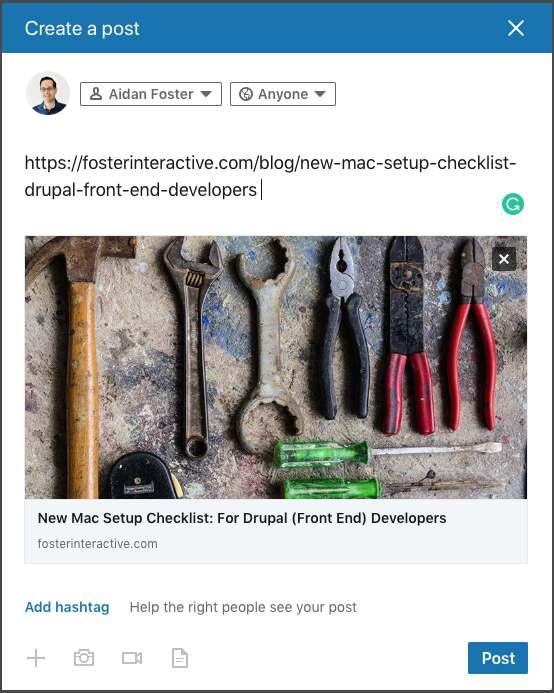
Select a Meta Image to tell a social media platform what image to use when sharing.
If blank, different social platforms like LinkedIn will randomly select an image on the page to appear on shared posts.
Posts with images generally perform better on social media so it is worth selecting an engaging image.
New owners in their own land
New owners in their own land
"New Owners in their Own Land carefully examines the prolonged historical dispute over the land selection process and subsurface rights in Nunavut, starting with the early resource development and oil and gas exploration in Canada's Arctic during the 1960's, through to the battle for Inuit self-determination.
McPherson outlines the federal government's "business-as-usual" tactic in pushing exploration further north onto Inuit territory and sheds light on exactly how the precendent-setting agreement was achieved whereby the Inuit managed to become owners of the mineral claims on their own land.
As a mineral consultant to the Inuit negotiators, McPherson draws on fascinating personal accounts, interviews, and meticulous research to consider the institutional, political, and personal conflicts that guided the process of Nunavut land claim negotiations,
Covering the land claim negotiation period between 1980 and 1990, New Owners in their Own Land addresses and important piece of Canadian history ad provides a unique perspective on Inuit self-determination and exploration history in the North." --Provided by publisher
McBeath, Jerry. "NEW OWNERS IN THEIR OWN LAND: MINERALS AND INUIT LAND CLAIMS. Robert McPherson." Polar Record, vol. 41, no. 2, 2005, pp. 162 - 163. https://journals-scholarsportal-info.myaccess.library.utoronto.ca/pdf/0….
Tyrrell, Martina. "McPHERSON, Robert, 2003 New Owners in Their Own Land, Minerals and Inuit Land Claims." Études/Inuit/Studies, vol. 28, no. 2, 2004, pp. 238-240. https://www-erudit-org.myaccess.library.utoronto.ca/fr/revues/etudinuit….
Optimize this page for search engines by customizing the Meta Title and Meta Description fields.
Use the Google Search Result Preview Tool to test different content ideas.
Select a Meta Image to tell a social media platform what image to use when sharing.
If blank, different social platforms like LinkedIn will randomly select an image on the page to appear on shared posts.
Posts with images generally perform better on social media so it is worth selecting an engaging image.
Native claims
Native claims
"This groundbreaking collection of essays shows that, from the moment European expansion commenced through to the twentieth century, indigenous peoples from America, Africa, Australia and New Zealand drafted legal strategies to contest dispossession. The story of indigenous resistance to European colonization is well known. But legal resistance has been wrongly understood to be a relatively recent phenomenon. These essays demonstrate how indigenous peoples throughout the world opposed colonization not only with force, but also with ideas. They made claims to territory using legal arguments drawn from their own understanding of a law that applies between peoples - a kind of law of nations, comparable to that being developed by Europeans. The contributors to this volume argue that in the face of indigenous legal arguments, European justifications of colonization should be understood not as an original and originating legal discourse but, at least in part, as a form of counter-claim.
Native Claims: Indigenous Law against Empire, 1500-1920 brings together the work of eminent social and legal historians, literary scholars, and philosophers, including Rolena Adorno, Lauren Benton, Duncan Ivison, and Kristin Mann. Their combined expertise makes this volume uniquely expansive in its coverage of a crucial issue in global and colonial history. The various essays treat sixteenth- and seventeenth-century Latin America, seventeenth- and eighteenth-century North America (including the British colonies and French Canada), and nineteenth-century Australasia and Africa. There is no other book that examines the issue of European dispossession of native peoples in such a way." -- Provided by publisher
Clayton, Daniel. "Native Claims: Indigenous Law against Empire, 1500-1920." BC Studies, no. 182, 2014, p. 223. Book Review Index Plus, http://link.galegroup.com/apps/doc/A375951114/BRIP?u=utoronto_main&sid=….
Mandell, D.R. "Native claims: indigenous law against empire, 1500-1920." CHOICE: Current Reviews for Academic Libraries, June 2012, p. 1940. Book Review Index Plus, https://go-gale-com.myaccess.library.utoronto.ca/ps/retrieve.do?tabID=M….
Optimize this page for search engines by customizing the Meta Title and Meta Description fields.
Use the Google Search Result Preview Tool to test different content ideas.
Select a Meta Image to tell a social media platform what image to use when sharing.
If blank, different social platforms like LinkedIn will randomly select an image on the page to appear on shared posts.
Posts with images generally perform better on social media so it is worth selecting an engaging image.
Aboriginal rights claims and the making and remaking of history
"The forums that were established during the second half of the twentieth century to address Aboriginal land claims have led to a particular way of engaging with and presenting Aboriginal, colonial, and national histories. The history that comes out of these land claim forums is often attacked for being "presentist": interpreting historical actions and actors through the lens of present day values, practices, and concerns. In Aboriginal Rights Claims and the Making and Remaking of History, a comparative study encompassing five former British colonies (Australia, Canada, New Zealand, South Africa, and the United States), Arthur Ray examines how claims-oriented research is framed by existing Indigenous rights law and claims legislation and how, in turn, it has influenced the development of laws and legislation. Ray also explores the ways in which the procedures and settings for claims adjudication--the courtroom, claims commissions, and the Waitangi Tribunal--have influenced the use of historical evidence, stimulated scholarly debates about the cultural/historical experiences of Indigenous people at the time of European contact and afterward, and have provoked reactions from politicians and scholars. While giving serious consideration to the arguments of presentism and the problems that overly presentist histories can create, Aboriginal Rights Claims and the Making and Remaking of History provides Aboriginal, academic, and legal communities with an essential perspective on how history is used in the Aboriginal claims process."--Provided by publisher.
Optimize this page for search engines by customizing the Meta Title and Meta Description fields.
Use the Google Search Result Preview Tool to test different content ideas.
Select a Meta Image to tell a social media platform what image to use when sharing.
If blank, different social platforms like LinkedIn will randomly select an image on the page to appear on shared posts.
Posts with images generally perform better on social media so it is worth selecting an engaging image.