CEDAW Convention
The protection afforded to women under CEDAW was bolstered in December 2000 when an Optional Protocol (a supplementary treaty to the Convention) entered into force. The Optional Protocol creates a complaint procedure by which individuals and groups may appeal to the Committee on the Elimination of Discrimination Against Women about alleged violations of the Convention. The Optional Protocol also establishes an inquiry procedure for the Committee to investigate grave or systematic human rights abuses against women.
This section of the WHRR database includes articles, documents and links about CEDAW and its Optional Protocol. Selected journal articles are posted in full text. Links to full text documents are included where available. Click on "articles", "documents" or "links" below for the annotated lists of CEDAW resources.
Quick links: CEDAW treaty; Optional Protocol
To locate resources pertaining to the implementation of CEDAW in Canada, enter "CEDAW and Canada" in the keyword field on the database search page.
Decoupling: Marital Violence and the Struggle to Divorce in China
This article exposes the ways that frequent denial of divorces for women experiencing domestic violence in Chinese courts goes against international norms and treaties promoting women’s rights and gender-equality. Thus, while China has championed such international norms and rights, in practice, its courts violate and subvert national laws and international legal commitments. It is argued that the Convention on the Elimination of All Forms of Discrimination Against Women (CEDAW) appears to have had few positive effects on women seeking divorces after experiencing domestic violence. The highly institutionalized practice of denying first-attempt divorce petitions in China disproportionately affects women and is correlated with the substantial number of female marital-violence refugees.

Optimize this page for search engines by customizing the Meta Title and Meta Description fields.
Use the Google Search Result Preview Tool to test different content ideas.
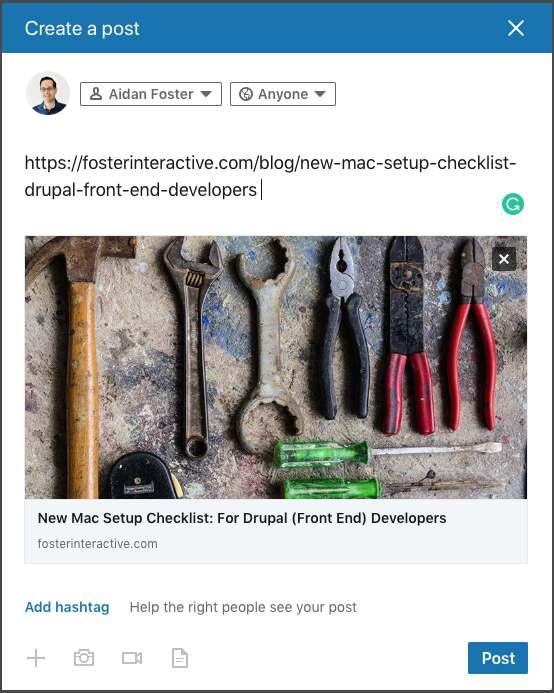
Select a Meta Image to tell a social media platform what image to use when sharing.
If blank, different social platforms like LinkedIn will randomly select an image on the page to appear on shared posts.
Posts with images generally perform better on social media so it is worth selecting an engaging image.
CEDAW’s General Recommendation No. 35: A quarter of a century of evolutionary approaches to violence against women
This article examines whether the Committee on the Elimination of All Forms of Discrimination Against Women’s (“CEDAW Committee”) General Recommendation No. 35 fundamentally contributes towards accountability for women’s human rights. Although the General Recommendation No. 35 reaffirms the global commitment towards eliminating gender-based violence, the author emphasizes that the CEDAW Committee lacks in providing a clear and in-depth analysis and in its ability to guide the States on their obligations and how to fulfill them. Nevertheless, General Recommendation No. 35 must be read with General Recommendation No. 19 and some of the other General Recommendations. Even with its flaws, the author concludes that General Recommendation No. 35 is likely to help reduce gender-based violence by directing States on the existing policies, legislation, and practical reforms necessary to support victims and prevent impunity.
Optimize this page for search engines by customizing the Meta Title and Meta Description fields.
Use the Google Search Result Preview Tool to test different content ideas.
Select a Meta Image to tell a social media platform what image to use when sharing.
If blank, different social platforms like LinkedIn will randomly select an image on the page to appear on shared posts.
Posts with images generally perform better on social media so it is worth selecting an engaging image.
The CEDAW Committee and Gender-Based Violence against Women
The UN Committee on the Elimination of Discrimination Against Women (CEDAW Committee) updated General recommendation No.19 on violence against women by adopting General Recommendation No.35 on gender-based violence against women. This article identifies the differences between the two recommendations, namely a more detailed account of the responsibilities of state parties through the concept of due diligence. However, this development is deemed positive but insufficient. Gender-based violence continues to be an international issue and Recommendation No.35 is not legally binding on states. A comprehensive UN treaty on violence against women is cited as the next logical step following Recommendation No. 35.
Optimize this page for search engines by customizing the Meta Title and Meta Description fields.
Use the Google Search Result Preview Tool to test different content ideas.
Select a Meta Image to tell a social media platform what image to use when sharing.
If blank, different social platforms like LinkedIn will randomly select an image on the page to appear on shared posts.
Posts with images generally perform better on social media so it is worth selecting an engaging image.
CEDAW and Treaty Compliance : Promoting Access to Modern Contraception
This article examines the role of CEDAW and its potential power as a treaty monitoring body in increasing access to modern contraception. The author points out that while modern contraception has been widely recognized as a reproductive right under international human rights law, unmet needs for it remain high, particularly in developing countries. The author draws on empirical research, the example of CEDAW’s influence on abortion rights, and the domestic politics theory of treaty compliance to centre CEDAW as a potential changemaker. The author argues that in certain conditions, CEDAW can pressure member states to reduce unmet needs by mobilizing domestic actors to influence national policies, laws, and investments aimed at increasing access to contraception. Finally, the author highlights specific CEDAW enforcement mechanisms that are especially effective and argues that the body should focus its attention on Sierra Leone and Haiti in particular due to their high unmet needs for contraception and high maternal mortality rate.
Optimize this page for search engines by customizing the Meta Title and Meta Description fields.
Use the Google Search Result Preview Tool to test different content ideas.
Select a Meta Image to tell a social media platform what image to use when sharing.
If blank, different social platforms like LinkedIn will randomly select an image on the page to appear on shared posts.
Posts with images generally perform better on social media so it is worth selecting an engaging image.
CEDAW and the Security Council : Enhancing Women’s Rights in Conflict
This article examines how the CEDAW Committee and the UN Security Council (UNSC) may operate simultaneously to maximize overall accountability for women’s rights in armed conflict. Although both institutions have adopted concurrent provisions with respect to women and conflict, the UNSC maintains a security-focus while the CEDAW Committee operates under a feminist rights-based approach. Despite these differences in mandate, the author argues that such tensions provide the opportunity for cross-regime dialogue and inter-regime accountability. In order to realize progress on women’s rights in conflict, the article endorses three different interactional undertakings: 1) enhanced data-sharing and joint reporting to address sexual exploitation within the UN system; 2) independent execution of institutional agendas to pursue state-level accountability through monitoring (CEDAW) and peacebuilding (UNSC) activities; and 3) greater integration of women’s human rights in the interpretation of the UNSC mandate.
Optimize this page for search engines by customizing the Meta Title and Meta Description fields.
Use the Google Search Result Preview Tool to test different content ideas.
Select a Meta Image to tell a social media platform what image to use when sharing.
If blank, different social platforms like LinkedIn will randomly select an image on the page to appear on shared posts.
Posts with images generally perform better on social media so it is worth selecting an engaging image.
International Women’s Human Rights : United States Stalling Progress from CEDAW into CIL
This article discusses how, by failing to ratify CEDAW and its enforcement mechanism (the Optional Protocol), the United States has not only crippled enforcement of the treaty within its own borders, but has also weakened the potential global reach of the principles of gender equality enshrined within CEDAW. The author notes that if enough states act in a consistent manner, out of a sense of legal obligation, for a long enough period of time, a new rule of international law will develop into customary international law (CIL). The United States’ ratification of CEDAW would send a message to the rest of the world of its commitment and, more importantly, would facilitate the induction of CEDAW into CIL.
Optimize this page for search engines by customizing the Meta Title and Meta Description fields.
Use the Google Search Result Preview Tool to test different content ideas.
Select a Meta Image to tell a social media platform what image to use when sharing.
If blank, different social platforms like LinkedIn will randomly select an image on the page to appear on shared posts.
Posts with images generally perform better on social media so it is worth selecting an engaging image.
Disaggregating the Human Rights Treaty Regime
This article discusses the question of treaty efficacy by disaggregating several aspects of the human rights regime and shows that aggregation obscures the nuances of treaty engagement. It shows that compared to other human rights treaties such as the ICCPR, CAT, CMC, or the Rome Statute of the ICC, there is a positive correlation between CEDAW commitment and greater female life expectancy and higher levels of female literacy. In the aggregate, the ratification of CEDAW improves women’s social, economic, and political rights. However, these impacts are conditional on a country’s level of democracy and the presence of strong, autonomous feminist groups.
Optimize this page for search engines by customizing the Meta Title and Meta Description fields.
Use the Google Search Result Preview Tool to test different content ideas.
Select a Meta Image to tell a social media platform what image to use when sharing.
If blank, different social platforms like LinkedIn will randomly select an image on the page to appear on shared posts.
Posts with images generally perform better on social media so it is worth selecting an engaging image.
Abortion, Reproductive Rights and the Possibilities of Reproductive Justice in South African Courts
This article examines the interplay between international law norms on women’s reproductive rights and South African reproductive health case law. The author first summarizes key elements of abortion rights and reproductive health in international human rights laws such as CEDAW and CESCR. The author then sets out two approaches to defining reproductive autonomy that can be adopted in a given region’s legal system, including court cases. The first is a “reproductive choice” approach that is negative because it fails to dismantle societal norms, attitudes, and structural barriers that impede women’s reproductive autonomy. The second, preferred by the author, is a “reproductive justice” approach that centres disadvantaged women within a commitment to the structural transformation of society. The author then examines the contemporary court system in South Africa, determining that its courts currently use a reproductive choice approach. The author uses a particular South African court case as a basis for re-imagining the jurisprudence within a reproductive justice approach. Finally, they reflect on the usefulness of such court cases as transformative tools of reproductive justice because they can secure better implementation of abortion legislation for disadvantaged women.
Optimize this page for search engines by customizing the Meta Title and Meta Description fields.
Use the Google Search Result Preview Tool to test different content ideas.
Select a Meta Image to tell a social media platform what image to use when sharing.
If blank, different social platforms like LinkedIn will randomly select an image on the page to appear on shared posts.
Posts with images generally perform better on social media so it is worth selecting an engaging image.
Interpreting the ECHR in its Normative Environment : Interaction Between the ECHR, the UN Convention on the Elimination of All Forms of Discrimination Against Women and the UN Convention on the Rights of the Child
The article draws attention to how integrative interpretation – a methodology where the European Court of Human Rights integrates its normative environment into the interpretation of the European Convention of Human Rights – may offer an important path to bridging many of the challenges caused by fragmentation in the field of human rights. More specifically, the article offers insight into a selection of ECHR cases that are characterised by the existence of normative overlap between the ECHR, the CEDAW and the CRC; and by the fact that interaction between these legal sources actually takes place in the interpretation carried out by the Court. Interaction is discussed through two topics: the issue of state obligations in relation to domestic violence, and the issue of state obligations in relation to expulsion of immigrants with children. The article demonstrates that systemic integration may result in a strengthening of the protection of human rights under ECHR through what is termed ‘interpretive widening and thickening’.
Optimize this page for search engines by customizing the Meta Title and Meta Description fields.
Use the Google Search Result Preview Tool to test different content ideas.
Select a Meta Image to tell a social media platform what image to use when sharing.
If blank, different social platforms like LinkedIn will randomly select an image on the page to appear on shared posts.
Posts with images generally perform better on social media so it is worth selecting an engaging image.
Women’s Progress and Women’s Human Rights
In this article, Nussbaum argues that the impact of international human rights law on women’s progress should be assessed broadly. Legal documents, e.g., the CEDAW, have little direct impact on their own. And what direct impact they do have is often difficult to measure. Nevertheless, Nussbaum argues that international women’s human rights documents, for all of their notable limitations, do have a substantial impact when assessed in terms of how they enable the women’s movement. This enablement includes changing the language surrounding women’s issues, bringing together women across the globe, and focusing women’s aspirations for social and political change. In showing that international women’s human rights documents are impactful in ways not easily quantifiable—yet still tangible and meaningful—Nussbaum restores confidence in the efficacy of such documents and opens up new areas of research in the field of international women’s human rights.
Optimize this page for search engines by customizing the Meta Title and Meta Description fields.
Use the Google Search Result Preview Tool to test different content ideas.
Select a Meta Image to tell a social media platform what image to use when sharing.
If blank, different social platforms like LinkedIn will randomly select an image on the page to appear on shared posts.
Posts with images generally perform better on social media so it is worth selecting an engaging image.