Indigenous Women
In Canada, Indigenous women continue to advocate for greater protection and promotion of their rights. Canadian resources on this database focus on a number of issues including matrimonial property rights, equality rights and self-government, government policy and the Indian Act, access to justice, and the impact of racism and sex discrimination.
Search Tip: To locate Canadian resources on Indigenous women, enter "Canada and Indigenous" into the keyword field of the search form.
Bystander No More? Improving the Federal Response to Sexual Violence in Indian Country
In this article, the author frames the United States as a culpable bystander in the many occurrences of sexual violence perpetrated against Indigenous women and children, focusing particularly on the policies of official indifference perpetrated by the United States government. The author goes on to explain the Sexual Assault Response Team (SART) model and its contribution to sex crimes that are committed on Indigenous land. The article concludes with some specific achievements of the Obama administration but emphasizes the work that remains to be done and proposes some next steps to build on the improvements made by the Obama administration.

Optimize this page for search engines by customizing the Meta Title and Meta Description fields.
Use the Google Search Result Preview Tool to test different content ideas.
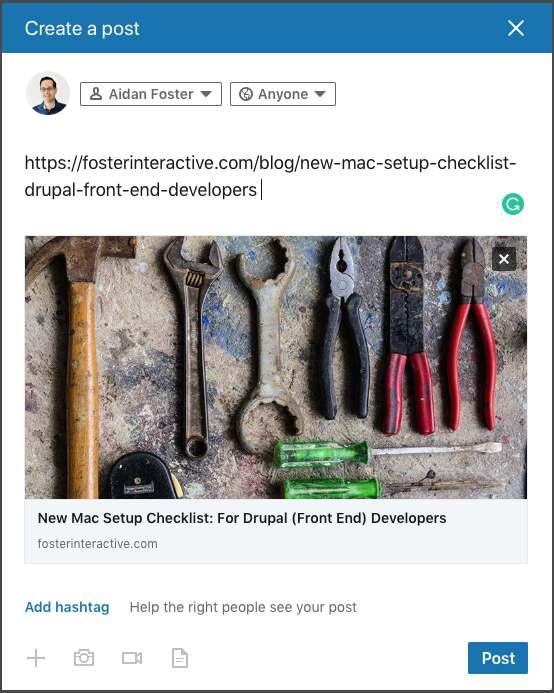
Select a Meta Image to tell a social media platform what image to use when sharing.
If blank, different social platforms like LinkedIn will randomly select an image on the page to appear on shared posts.
Posts with images generally perform better on social media so it is worth selecting an engaging image.
Mohegan Women, the Mohegan Church, and the Lasting of the Mohegan Nation
This article discusses how the Mohegan Congregation Church of New England is part of a long Mohegan tradition of strategic cooperation with non-Indians to achieve their own Mohegan goals. Women, the author explains, have always been at the centre of his tradition. In fact, women have a central role in Mohegan culture, having rights in land and leadership. The author suggests that the establishment of this church helped preserve these rights, as well as their Mohegan land and the tribe itself. To do so, the author recounts the legal history of the Mohegan tribe, how conventional records dismiss women’s rights, as well as how the church was a centre for women’s activity and for the recognition of women.
Optimize this page for search engines by customizing the Meta Title and Meta Description fields.
Use the Google Search Result Preview Tool to test different content ideas.
Select a Meta Image to tell a social media platform what image to use when sharing.
If blank, different social platforms like LinkedIn will randomly select an image on the page to appear on shared posts.
Posts with images generally perform better on social media so it is worth selecting an engaging image.
A Silent Epidemic: Revisiting the 2013 Reauthorization of the Violence against Women Act to Better Protect American Indian and Alaska Native Women
This article explores the results of the Violence Against Women Reauthorization Act of 2012 (VAWA), focusing particularly on various situations where it fails to protect Indigenous women. The author discusses the need for an expansion of VAWA to better protect the rights of the Indigenous women inhabiting American Indian and Alaska. The author’s key recommendation is to add a “stranger and acquaintance violence” to provide coverage for victims that do not meet the “dating” or “domestic violence” situations that VAWA currently offers protection against.
Optimize this page for search engines by customizing the Meta Title and Meta Description fields.
Use the Google Search Result Preview Tool to test different content ideas.
Select a Meta Image to tell a social media platform what image to use when sharing.
If blank, different social platforms like LinkedIn will randomly select an image on the page to appear on shared posts.
Posts with images generally perform better on social media so it is worth selecting an engaging image.
Missing and Murdered: Finding a Solution to Address the Epidemic of Missing and Murdered Indigenous Women in Canada and Classifying It as a "Canadian Genocide"
The author comments on the human rights crisis that native communities across the world face: the sexual violence and murder of indigenous women and girls. The author first discusses the history of violence and discrimination against Indigenous communities in Canada, and how this has resulted in missing and murdered Indigenous women. The author also inquiries into the actions taken to investigate this epidemic. In the second part of the article, the author proposes several solutions to address the root of this epidemic. The author also makes the argument that this epidemic should be considered a human rights violation, more specifically, a violation of the human rights of Indigenous women in Canada.
Optimize this page for search engines by customizing the Meta Title and Meta Description fields.
Use the Google Search Result Preview Tool to test different content ideas.
Select a Meta Image to tell a social media platform what image to use when sharing.
If blank, different social platforms like LinkedIn will randomly select an image on the page to appear on shared posts.
Posts with images generally perform better on social media so it is worth selecting an engaging image.
Mapping Violence Against Indigenous Women and Girls: Beyond Colonizing Data and Mapping Practices
This article focuses on how pointing out and mapping violence against Indigenous people itself may contribute to ongoing violence, through what the author calls "data terrorism". The author considers initiatives that gather data on gender violence against Indigenous women and girls. The author argues that this approach is problematic because it stems from colonial ideas about controlling Indigenous women's bodies and using data as surveillance tool. These practices work to reinforce settler colonial power, terrorize Indigenous women, and contribute to ongoing violence against them. The author suggests that a better approach would involve Indigenous people having control over their own data, such that they play a central role in designing more effective solutions to address gender violence.
Optimize this page for search engines by customizing the Meta Title and Meta Description fields.
Use the Google Search Result Preview Tool to test different content ideas.
Select a Meta Image to tell a social media platform what image to use when sharing.
If blank, different social platforms like LinkedIn will randomly select an image on the page to appear on shared posts.
Posts with images generally perform better on social media so it is worth selecting an engaging image.
Race, Space, and Prostitution : The Making of Settler Colonial Canada
This article employs Sherene Razack’s critical anti-racist feminist theoretical and methodological framework to study the role that prostitution has played in settler colonial domination of Indigenous peoples and lands past and present. Four examples are used to illustrate how prostitution has been used by settler colonial forces to perpetuate violence against Indigenous women and girls as well as justify and erase the presence of this violence in society: Early Settlement in British Columbia, the Indian Act, the Pass System, and Vancouver’s Missing Women. Prostitution is cited as a method used to secure a hierarchical societal structure that places Indigenous women and girls at the bottom through dehumanization and the elimination of self-determination. The ideology that underpins prostitution as a method of colonial domination, racism, and heteropatriarchy is identified as the same ideology that underpins the attitudes that allow this violence to continue, in a lot of cases unpunished.
Optimize this page for search engines by customizing the Meta Title and Meta Description fields.
Use the Google Search Result Preview Tool to test different content ideas.
Select a Meta Image to tell a social media platform what image to use when sharing.
If blank, different social platforms like LinkedIn will randomly select an image on the page to appear on shared posts.
Posts with images generally perform better on social media so it is worth selecting an engaging image.
Land rights and neoliberalism : an irreconcilable conflict for indigenous peoples in India?
The Forest Rights Act (FRA) is legislation meant to advance the rights to land for Indigenous forest peoples in India. The author identifies two main challenges to the implementation of the FRA as the incompatibility of the legislation with Advisasi's legal traditions, and the reliance on elected officials to work towards justice. The legislation operates amidst colonial legal frameworks and neoliberal ideology. The author discusses the colonial legal past of India and the recent trend towards recognition of human rights and Indigenous human rights reflected by international law instruments such as UNDRIP. The author argues that these rights have not been realized in reality, and provides the protest of a hydroelectricity project in Chamba District as an example of the government’s disregard for the FRA. The author concludes by emphasizing that continued government neglect of the FRA risks ‘hollowing’ out the efficacy of the land rights that the legislation grants.
Optimize this page for search engines by customizing the Meta Title and Meta Description fields.
Use the Google Search Result Preview Tool to test different content ideas.
Select a Meta Image to tell a social media platform what image to use when sharing.
If blank, different social platforms like LinkedIn will randomly select an image on the page to appear on shared posts.
Posts with images generally perform better on social media so it is worth selecting an engaging image.
Gender Inequality and Land Rights : The Situation of Indigenous Women in Cameroon
The central position of Indigenous women in food production in Cameroon means that the loss of ancestral land and natural resource development has contributed to the marginalization of indigenous women. The author provides a comprehensive discussion of the history of various Indigenous peoples and the customary notion of land rights in Cameroon. While land is regarded to be collectively held, Indigenous women are largely excluded from decision-making in relation to land. Customary law grants no land rights to women which can only be attained through marriage. The author outlines the various legal mechanisms, both domestic and international, which can be applied to land rights. The challenges Indigenous women face in relation to land rights include lack of proper recognition, exacerbated poverty, and marginalization. The author advocates for legislative attention towards Indigenous women and their participation in decision-making.
Optimize this page for search engines by customizing the Meta Title and Meta Description fields.
Use the Google Search Result Preview Tool to test different content ideas.
Select a Meta Image to tell a social media platform what image to use when sharing.
If blank, different social platforms like LinkedIn will randomly select an image on the page to appear on shared posts.
Posts with images generally perform better on social media so it is worth selecting an engaging image.
Overlooked and Unprotected : Central American Indigenous Migrant Women in Mexico
This article is relevant to research that aims to understand the legal mechanisms which impact Female migrants and Indigenous female migrants from the Northern Triangle of Central America ("NTCA"). The article begins with an overview of the high rate of poverty, violence, and immigration in the NTCA, especially for the people of Guatemala and Honduras. The author then analyzes the rights of Indigenous peoples, including a discussion of Mexico’s commitment to international instruments protecting refugee rights and Mexico’s refugee framework and constitution. The article also discusses Indigenous justice systems and their history in Mexico. The author then applies these legal frameworks to the context of Female Migrants and Indigenous women, finding Mexico’s immigration system insufficient to address their needs. It is largely based on enforcement and is currently underdeveloped. Lastly, the author argues that it is unlikely indigenous legal systems will assist female migrants in the alternative.
Optimize this page for search engines by customizing the Meta Title and Meta Description fields.
Use the Google Search Result Preview Tool to test different content ideas.
Select a Meta Image to tell a social media platform what image to use when sharing.
If blank, different social platforms like LinkedIn will randomly select an image on the page to appear on shared posts.
Posts with images generally perform better on social media so it is worth selecting an engaging image.
Legal Pluralism and Indigenous Women’s Rights in Mexico : The Ambiguities of Recognition
This article examines the effects of the ambiguous and limited recognition of Indigenous law in Mexico on Indigenous women’s efforts to attain greater gender justice. Mexico constitutionally recognizes indigenous peoples’ right to self-determination and has adopted both the UN Declaration on the Rights of Indigenous Peoples and ILO Convention 169. However, the State still has not recognized Indigenous peoples’ right to territory and limits self-governance rights in practice. The author presents case studies to demonstrate the inconsistency of State treatment of Indigenous law. State authorities have used cases of gender discrimination within customary legal systems to justify limiting Indigenous autonomy. Meanwhile, it has denied Indigenous women access to justice and has promoted policies of economic development that expose Indigenous women to greater harm. The ambiguity of recognition of Indigenous governance means that Indigenous people are increasingly subject to persecution and criminalization for exercising their nationally and internationally recognized rights to autonomy.
Optimize this page for search engines by customizing the Meta Title and Meta Description fields.
Use the Google Search Result Preview Tool to test different content ideas.
Select a Meta Image to tell a social media platform what image to use when sharing.
If blank, different social platforms like LinkedIn will randomly select an image on the page to appear on shared posts.
Posts with images generally perform better on social media so it is worth selecting an engaging image.