Race and Gender
The scholarly articles in this section of the WHRR database explore theoretical approaches that may bridge the gap between race and gender: critical race feminism, intersectionality, and interlocking systems of oppression. Critical race feminism is a branch of critical race theory considering the racialization of women. Intersectionality is based on the idea that a person's identity is comprised of different categories, which intersect to affect one's experience of discrimination. Interlocking systems of oppression begins with the notion that all systems of oppression, for example race, class, gender, sexuality, are implicated in every experience and work together to mutually reinforce one another.
The documents list includes United Nations documents, relevant international agreements, and materials from governmental and non-governmental organizations.
Racial and Ethnic Identity, Gender, and School Suspension: Heterogeneous Effects Across Hispanic and Caribbean Subgroups
This study relies on data from the 2018 Florida Youth Substance Abuse Survey, a statewide representative sample of Florida youth in public middle and high schools, to explore the effects of race/ethnicity and gender on youths’ chances of receiving a school suspension. The findings demonstrate that Black/non-Hispanic, Haitian, Caribbean and Dominican youth are likelier to receive a school suspension, particularly among female students. The evidence of a Hispanic-White difference is mixed, apart from Puerto Rican youth facing a heightened risk. The study’s findings demonstrate the essentiality of skin tone and physical appearance over subgroup-specific perceptions of criminal and cultural threat. Despite this implication, the authors conclude that Puerto Rican students may still experience persistent disadvantages as an institutional response to their unique migrant status to Florida.

Optimize this page for search engines by customizing the Meta Title and Meta Description fields.
Use the Google Search Result Preview Tool to test different content ideas.
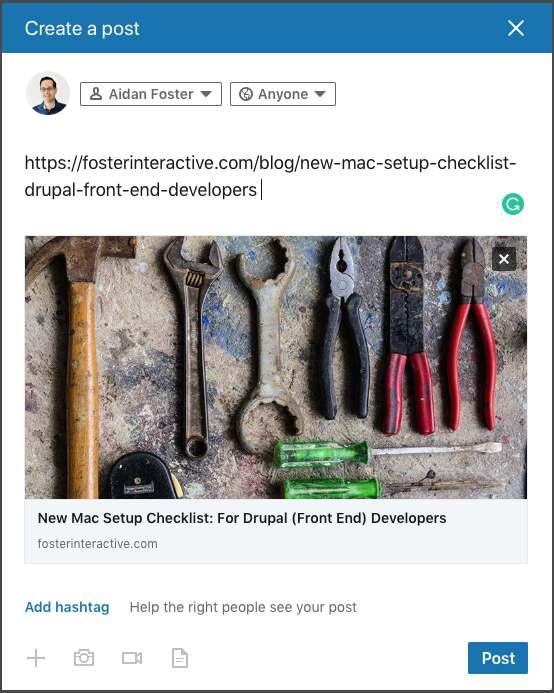
Select a Meta Image to tell a social media platform what image to use when sharing.
If blank, different social platforms like LinkedIn will randomly select an image on the page to appear on shared posts.
Posts with images generally perform better on social media so it is worth selecting an engaging image.
Racial and Gender Threat and the Death Penalty: A County-Level Examination of Sociopolitical Factors Influencing Death Sentences
This study traces the local phenomenon of the death penalty in the United States, finding that both race and gender factors are key indicators of death sentences within communities. Based on the socio-political context of each region, it suggests that counties with Black populations greater than the state median experience increases in all death sentences, while gender equality in education holds a remedial effect on death penalty application. Ultimately, the study demonstrates that the persistence of extralegal factors, particularly racial bias, contributing to death sentencing is evidence that these relationships must be recognized and factored into research and administration of capital sentencing.
Optimize this page for search engines by customizing the Meta Title and Meta Description fields.
Use the Google Search Result Preview Tool to test different content ideas.
Select a Meta Image to tell a social media platform what image to use when sharing.
If blank, different social platforms like LinkedIn will randomly select an image on the page to appear on shared posts.
Posts with images generally perform better on social media so it is worth selecting an engaging image.
Crawling out of Fear and the Ruins of an Empire: Queer, Black, and Native Intimacies, Laws of Creation and Futures of Care
This article connects racialized violence to the United States’ formation and persistence, which has historically used race as the baseline historical indicator for injury and reparation. To do so, it reflects upon how a law that predicates equality upon the principle of sameness is sustained by the relational order and invites readers to consider whether shifting relationship values and forms can foster the possibility of laws that encourage principles of collective togetherness. First, it unpacks the rulings in Lawrence and Obergefell to establish the idealized and fictional public/private divide. It then further explores the national value of privatized dependencies that simultaneously defines the American family and alienates the racialized public. Finally, the article traces how colonialists deployed forms of romanticized relationships and their value structures to justify the desecration of Native cultures, ultimately contending that the contemporary version of this relational order is that of white supremacy, not equality.
Optimize this page for search engines by customizing the Meta Title and Meta Description fields.
Use the Google Search Result Preview Tool to test different content ideas.
Select a Meta Image to tell a social media platform what image to use when sharing.
If blank, different social platforms like LinkedIn will randomly select an image on the page to appear on shared posts.
Posts with images generally perform better on social media so it is worth selecting an engaging image.
Policing Commercial Sex in 1970s France: Regulating the Racialized Sexual Order
This article relies on multi-site archival research to explore the way in which 1970s France racialized the regulation of commercial sex and its relation to the preservation of gendered, racialized, and class-dependent sexual order. Through its examination, this article further contextualizes and historicizes an analysis of French legislative and law enforcement construction of race and colour blindness. First, it focuses on the period during and after the Algerian War, when colonialist worries about sexual threats posed by North African male labour migrants in the French metropole contributed to politicians, journalists, and policymakers’ decision to adopt selective tolerance of commercial sex. It then demonstrates that such unfocused legislation surrounding commercial sex allowed police to hold discretionary power to protect the existing sexual order using justifications of colourblindness. In doing so, law enforcement implemented and enforced a racially particularistic and universalist legislation for regulating commercial sex throughout France’s urban metropole.
Optimize this page for search engines by customizing the Meta Title and Meta Description fields.
Use the Google Search Result Preview Tool to test different content ideas.
Select a Meta Image to tell a social media platform what image to use when sharing.
If blank, different social platforms like LinkedIn will randomly select an image on the page to appear on shared posts.
Posts with images generally perform better on social media so it is worth selecting an engaging image.
Terceirizadas, Centered: A Critical Analysis of Outsourcing and Gender and Racial Hierarchies in Brazil
This article critically surveys the Brazilian Supreme Court decision in Arguição De Descrumprimento de Preceito Fundamental (“ADPF”) 324, a landmark case in which the court declared prohibiting labour outsourcing as unconstitutional. It first examines the majority opinion, arguing that underpinning its logic is a neoliberal-based logic that dismisses any abuses inherent to outsourcing as mere distortions. It then turns to problems within the minority opinion, which only advocates for outsourcing “non-core” activities, namely care-related work. After surveying these limitations, the author uses terceirizadas (black, female outsourced labour) as a point of departure to demonstrate how the majority and dissenting opinions legitimize and perpetuate subordination by concealing power relations. Ultimately, the paper proposes a provisional anti-subordination-based argument to illustrate the unconstitutionality of Brazil’s outsourcing.
Optimize this page for search engines by customizing the Meta Title and Meta Description fields.
Use the Google Search Result Preview Tool to test different content ideas.
Select a Meta Image to tell a social media platform what image to use when sharing.
If blank, different social platforms like LinkedIn will randomly select an image on the page to appear on shared posts.
Posts with images generally perform better on social media so it is worth selecting an engaging image.
The Borders That Disadvantage Migrant Women in Enjoying Human Rights
This article focuses on the notion of “intersecting borders of equality” ––drawn from intersectionality theory and the concept of “normative boundaries of belonging” ––to show the disadvantages and human rights violations faced by migrant women. The author highlights that formal, normative, and practical borders construe migrant women as outsiders or lesser members in society. When viewed through this lens, it becomes evident that migrant women’s experiences are shaped by different inequality structures rather than their own personal choices or failures. The author concludes by paying attention to how it may not always be possible to dismantle borders of inequality, especially without making deep changes in dominant cultural attitudes. Therefore, the focus of international human rights law should be to remain attentive to fixing these borders rather than reinforcing its disadvantages.
Optimize this page for search engines by customizing the Meta Title and Meta Description fields.
Use the Google Search Result Preview Tool to test different content ideas.
Select a Meta Image to tell a social media platform what image to use when sharing.
If blank, different social platforms like LinkedIn will randomly select an image on the page to appear on shared posts.
Posts with images generally perform better on social media so it is worth selecting an engaging image.
Trafficking of Women: Perspectives in International Law
This research paper analyzes various international legal instruments that deal with the trafficking of women and discusses the ways in which it provides protection to the victims. These instruments include the Convention for the Suppression of Traffic in Persons and of the Exploitation of Others, CEDAW, the Palermo Protocol, and Human Rights Covenants. In their analysis, the authors highlight the inefficiencies of anti-trafficking regulations in preventing trafficking activities and providing remedy to the victims. In order to remedy these gaps in international legal instruments, the authors suggest establishing co-operation between different states, employing more rigorous enforcement mechanisms of Covenants, and promoting education and awareness about trafficking within the independent states.
Optimize this page for search engines by customizing the Meta Title and Meta Description fields.
Use the Google Search Result Preview Tool to test different content ideas.
Select a Meta Image to tell a social media platform what image to use when sharing.
If blank, different social platforms like LinkedIn will randomly select an image on the page to appear on shared posts.
Posts with images generally perform better on social media so it is worth selecting an engaging image.
What About #UsToo?: The Invisibility of Race in the #MeToo Movement
The article references the #MeToo movement to address the importance of examining the intersectionality of race and gender in harassment cases for women of color. The article cites the experiences of Leslie Jones and Jemele Hill. They were faced with gender-guarded and competence-undermining sexual harassment that were made with clear intent to target their gender. However, the overlaying racial nature of the harassment made it difficult to see the harassment as relating to gender. The article notes that the intersectionality between race and gender affects the type of harassment and form of racialized sexism that individuals experience. Therefore, the article suggests that when analyzing sexual harassment claims a complainant’s intersectional and multidimensional identity should be evaluated rather than using a reasonable woman standard, which may be not be inclusive of other factors such as race.
Optimize this page for search engines by customizing the Meta Title and Meta Description fields.
Use the Google Search Result Preview Tool to test different content ideas.
Select a Meta Image to tell a social media platform what image to use when sharing.
If blank, different social platforms like LinkedIn will randomly select an image on the page to appear on shared posts.
Posts with images generally perform better on social media so it is worth selecting an engaging image.
Race, Space, and Prostitution : The Making of Settler Colonial Canada
This article employs Sherene Razack’s critical anti-racist feminist theoretical and methodological framework to study the role that prostitution has played in settler colonial domination of Indigenous peoples and lands past and present. Four examples are used to illustrate how prostitution has been used by settler colonial forces to perpetuate violence against Indigenous women and girls as well as justify and erase the presence of this violence in society: Early Settlement in British Columbia, the Indian Act, the Pass System, and Vancouver’s Missing Women. Prostitution is cited as a method used to secure a hierarchical societal structure that places Indigenous women and girls at the bottom through dehumanization and the elimination of self-determination. The ideology that underpins prostitution as a method of colonial domination, racism, and heteropatriarchy is identified as the same ideology that underpins the attitudes that allow this violence to continue, in a lot of cases unpunished.
Optimize this page for search engines by customizing the Meta Title and Meta Description fields.
Use the Google Search Result Preview Tool to test different content ideas.
Select a Meta Image to tell a social media platform what image to use when sharing.
If blank, different social platforms like LinkedIn will randomly select an image on the page to appear on shared posts.
Posts with images generally perform better on social media so it is worth selecting an engaging image.
Comparison in Intersectional Discrimination
This article considers the use of the comparator tests for claims based on more than ground of discrimination. The article raises the concern that there is a principal problem with choosing the correct comparator group. In multi-ground discrimination cases, choosing strict separate comparator groups for each ground may not capture the interplay between different grounds of discrimination such as gender and race. Using a single dominant comparator group for all grounds of discrimination also discredits the complexity of intersectionality. The article suggests the contextual comparison approach used by the South African Constitutional Court. It suggests that for multi-ground discrimination cases, all relevant permutations of comparators to the case should be analyzed. All relevant comparators should then be examined contextually to characterize for any unfair impact or group disadvantage.
Optimize this page for search engines by customizing the Meta Title and Meta Description fields.
Use the Google Search Result Preview Tool to test different content ideas.
Select a Meta Image to tell a social media platform what image to use when sharing.
If blank, different social platforms like LinkedIn will randomly select an image on the page to appear on shared posts.
Posts with images generally perform better on social media so it is worth selecting an engaging image.