Aboriginal Title
In all fairness
In all fairness
"For some years now, the Government of Canada has been engaged in attempting to resolve what have come to be known as Comprehensive Native Land Claims, through a negotiation process. There has been moderate success but much more remains to be done. The purpose of this book is to set out for the consideration of all Canadians what the government proposes as the way forward. I say all Canadians advisedly: I hope this book will be looked at by Natives and non-Natives, by northerners and southerners, by those among us who seek to conserve and by those among us who seek to develop. What this statement contains above all, in this time of political uncertainty and general financial restraint, is a formal re-affirmation of a commitment: that commitment is to bring to a full and satisfactory conclusion, the resolution of Native land claims.
All Canadians would agree that claims have been left unresolved for too long. My wish is that this book will give all interested persons an idea of the depth of my personal commitment as well as the government's to endorsing, developing and implementing the policy initiated by one of my predecessors, the Honourable Jean Chretien.
Essentially what is being addressed here are claims based on the concept of 'aboriginal title' - their history, current activities surrounding them, and our proposals for dealing with them in the future. While this statement is concerned with the claims of this nature it does not preclude government consideration of claims relating to historic loss of lands by particular bands or groups of bands. Indeed, the government, in consultation with Indian organization across Canada, is currently reviewing its policy with respect to specific claims over a wide spectrum of historic grievances - unfulfilled treaty obligations, administration of Indian assets under the Indian Act and other matters requiring attention." -- Provided by forward

Optimize this page for search engines by customizing the Meta Title and Meta Description fields.
Use the Google Search Result Preview Tool to test different content ideas.
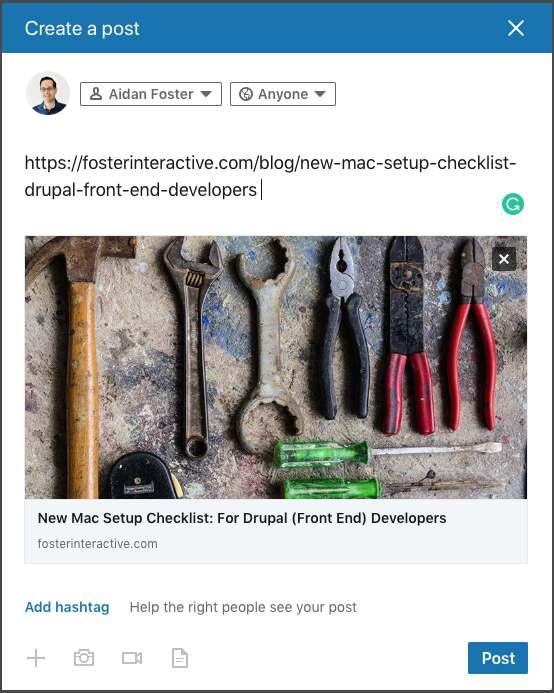
Select a Meta Image to tell a social media platform what image to use when sharing.
If blank, different social platforms like LinkedIn will randomly select an image on the page to appear on shared posts.
Posts with images generally perform better on social media so it is worth selecting an engaging image.
Aboriginal title in British Columbia
Aboriginal title in British Columbia
“The legal case Delgamuukw v. The Queen represents a significant moment in the history of British Columbia. The case is about aboriginal title in the province, specifically the claim of the Gitksan and Wet’suwet’en people to ownership and jurisdiction over their traditional territories. But it is about much more. The judgement, the case which led to it, and, now, the appeal of the judgement, compel British Columbia’s to come face-to-face with their history, their origins, and their most fundamental social and cultural values. Aboriginal Title in British Columbia, a collection of essays on the Delgamuukw judgement, examines the legal, historical, political, human, and international dimensions of this historic case.” – Provided by Publisher
Cassidy, F., & Paine, R. (1995). Aboriginal title in British Columbia: Delgamuukw vs the queen // review. Canadian Ethnic Studies, 27(1), 161-162. http://myaccess.library.utoronto.ca/login?url=https://search-proquest-c…
Optimize this page for search engines by customizing the Meta Title and Meta Description fields.
Use the Google Search Result Preview Tool to test different content ideas.
Select a Meta Image to tell a social media platform what image to use when sharing.
If blank, different social platforms like LinkedIn will randomly select an image on the page to appear on shared posts.
Posts with images generally perform better on social media so it is worth selecting an engaging image.
Essays on the Mabo decision
Essays on the Mabo decision
"This work brings together a collection of essays on the Mabo decisions. The essays presented here reflect a wide range of viewpoints and combine to provide a work that makes a significant contribution to the debate surrounding this important decision.
Included in the work are essays originally published in the Sydney Law Review in its special symposium issue of June 1993, and the Australian Mining and Petroleum Law Association Bulletin. An additional article by Barbara Hocking, commenting on recent developments, is also included." -Provided by Publisher
Lumb, R.D. "Essays on the Mabo Decision." International and Comparative Law Quarterly, July 1994, pp. 752-753. Book Review Index Plus, http://link.galegroup.com/apps/doc/A15743541/BRIP?u=utoronto_main&sid=B….
McHugh, P.G. "Essays on the Mabo Decision." Cambridge Law Journal, Mar. 1995, pp. 188-190. Book Review Index Plus, http://link.galegroup.com/apps/doc/A16853882/BRIP?u=utoronto_main&sid=B….
Optimize this page for search engines by customizing the Meta Title and Meta Description fields.
Use the Google Search Result Preview Tool to test different content ideas.
Select a Meta Image to tell a social media platform what image to use when sharing.
If blank, different social platforms like LinkedIn will randomly select an image on the page to appear on shared posts.
Posts with images generally perform better on social media so it is worth selecting an engaging image.
Native title
Native title
"A summary of proceedings of a cultural induction course conducted by the National Native Title Tribunal on 1 to 3 December, 1994, at the Nedlands campus of the University of Western Australia. The course was primarily designed a a training exercise for the benefit of the staff and members of the National Native Tribunal, but was broadened to include representatives of the Federal Court, government, parliament, industry, and the media." -- Provided by preface
Optimize this page for search engines by customizing the Meta Title and Meta Description fields.
Use the Google Search Result Preview Tool to test different content ideas.
Select a Meta Image to tell a social media platform what image to use when sharing.
If blank, different social platforms like LinkedIn will randomly select an image on the page to appear on shared posts.
Posts with images generally perform better on social media so it is worth selecting an engaging image.
Native title legislation in Australia
Native title legislation in Australia
"On 16-17 June 1994, the Centre for Commercial and Resources Law of the University of Western Australia and Murdoch University brought together some of Australia's leading legal practitioners, academics, and federal and state policy makers to review the legislative responses to the Mabo decision and address other issues raised by that case. Of critical importance are ongoing High Court challenges to the Commonwealth legislation by the State of Western Australia and by Aboriginal groups contesting the constitutionality of the Western Australian legislation. The essays in this volume represent the product of that Conference, the Native Title Legislation Conference." -- Provided by preface
Optimize this page for search engines by customizing the Meta Title and Meta Description fields.
Use the Google Search Result Preview Tool to test different content ideas.
Select a Meta Image to tell a social media platform what image to use when sharing.
If blank, different social platforms like LinkedIn will randomly select an image on the page to appear on shared posts.
Posts with images generally perform better on social media so it is worth selecting an engaging image.
Commercial implications of native title
Commercial implications of native title
"This book focuses on the extensive commercial implications of Mabo, Wik and the 1997 native title legislation. It covers Australian native title legislation and cases; the Wik decision and post-Wik legislative options; the government's proposed changes to the Native Title Act; Cape York and Crescent Head Agreements; the Century Zinc negotiations; accounting and auditing implications; implications for mining and pastoral companies; freshwater resources and native title; leases and native title; native title negotiations and mediations; native title policy issues for governments; practical steps for professional advisers; and evidence and proof of native title" - Provided by publisher
Parker, D. (1997). Commercial implications of native title. Australian Accountant, 67(6), 60. http://myaccess.library.utoronto.ca/login?url=https://search-proquest-c…
Clarke, J. (1997). Commercial implications of native title. Federal Law Review, 25(2), 385-390. https://heinonline-org.myaccess.library.utoronto.ca/HOL/Page?handle=hei…
Optimize this page for search engines by customizing the Meta Title and Meta Description fields.
Use the Google Search Result Preview Tool to test different content ideas.
Select a Meta Image to tell a social media platform what image to use when sharing.
If blank, different social platforms like LinkedIn will randomly select an image on the page to appear on shared posts.
Posts with images generally perform better on social media so it is worth selecting an engaging image.
Native title in Australia
Native title in Australia
"Native title in Australia contains papers on the conflict between Commonwealth and State native title legislation and on the validity of the state acts, especially the Western Australian Land (Title and Traditional Usage) Act. The book also discusses the implications of the various acts for Aboriginal people and industry, with regional agreements seen as future solution." -- Provided by publisher
Alex Reilly, Review of Bartlett, Native Title in Australia (Sydney: Butterworths, 1999) E Law, Volume 7, Number 1 (March 2000) http://www.murdoch.edu.au.myaccess.library.utoronto.ca/elaw/issues/v7n1….
Optimize this page for search engines by customizing the Meta Title and Meta Description fields.
Use the Google Search Result Preview Tool to test different content ideas.
Select a Meta Image to tell a social media platform what image to use when sharing.
If blank, different social platforms like LinkedIn will randomly select an image on the page to appear on shared posts.
Posts with images generally perform better on social media so it is worth selecting an engaging image.
Mabo, Wik & native title
Mabo, Wik & native title
"More than a decade has passed since the High Court's decision in Mabo, and this book remains a key mechanism for distinguishing between fact & myth among the claims & counter-claims which bedevil Australia's native title debate. It provides an accurate, accessible, and unbiased account of what the judges and the Acts of Parliament have actually said about native title, what it means, and what problems are likely to arise. Recognising that the 1993 ruling in Mabo remains the basic legal document on native title, this 4th edition retains the plain language version of the ruling as its core. There follow equally straightforward explanations of the Native Title Act 1993, the 1996 High Court judgment in Wik, and the Howard government's legislative response in 1998 with the '10 point plan.' Finally, there are two completely new chapters on how the native title legislation has worked in practice, what important issues remain to be resolved, and some possible future directions." -- Provided by publisher
Optimize this page for search engines by customizing the Meta Title and Meta Description fields.
Use the Google Search Result Preview Tool to test different content ideas.
Select a Meta Image to tell a social media platform what image to use when sharing.
If blank, different social platforms like LinkedIn will randomly select an image on the page to appear on shared posts.
Posts with images generally perform better on social media so it is worth selecting an engaging image.
Justice for all?
Justice for all?
"Papers examine discrete and contemporary issues in native title law; highlights difficulties in competing Indigenous and non Indigenous interests; shortfall in common law solutions; papers annotated separately." -- Provided by publisher
N/A
Optimize this page for search engines by customizing the Meta Title and Meta Description fields.
Use the Google Search Result Preview Tool to test different content ideas.
Select a Meta Image to tell a social media platform what image to use when sharing.
If blank, different social platforms like LinkedIn will randomly select an image on the page to appear on shared posts.
Posts with images generally perform better on social media so it is worth selecting an engaging image.
Let right be done
Let right be done
"In the early 1970s, many questioned whether Aboriginal title existed in Canada and rejected the notion that Aboriginal peoples should have rights different from those of other citizens. But in 1973 the Supreme Court of Canada issued a landmark decision in the Calder case, confirming that Aboriginal title constituted a right within Canadian law.
Let Right Be Done examines the doctrine of Aboriginal title thirty years later and puts the Calder case in its legal, historical, and political context, both nationally and internationally. With its innovative blend of scholarly analysis and input from many of those intimately involved in the case, this book should be essential reading for anyone interested in Aboriginal law, treaty negotiations, and the history of the 'BC Indian land question.'” -- Provided by publisher
Brooks, Adrian. "Let Right Be Done: Aboriginal Title, the Calder Case, and the Future of Indigenous Rights." The Advocate, July 2009, pp. 551-554. Book Review Index Plus, http://link.galegroup.com/apps/doc/A227811357/BRIP?u=utoronto_main&sid=….
Martz, Robert. "Let Right Be Done: Aboriginal Title, the Calder Case, and the Future of Indigenous Rights." Saskatchewan Law Review, Winter 2009, pp. 161-162. Book Review Index Plus, http://link.galegroup.com/apps/doc/A202329629/BRIP?u=utoronto_main&sid=….
Optimize this page for search engines by customizing the Meta Title and Meta Description fields.
Use the Google Search Result Preview Tool to test different content ideas.
Select a Meta Image to tell a social media platform what image to use when sharing.
If blank, different social platforms like LinkedIn will randomly select an image on the page to appear on shared posts.
Posts with images generally perform better on social media so it is worth selecting an engaging image.